
Tanker trucks are essential for transporting liquids such as fuel, chemicals, and food-grade products. Understanding the tanker truck maximum capacity is crucial for logistics efficiency, regulatory compliance, and overall safety. This guide provides practical insights into tanker truck capacities, industry standards, and best practices for safe operations.
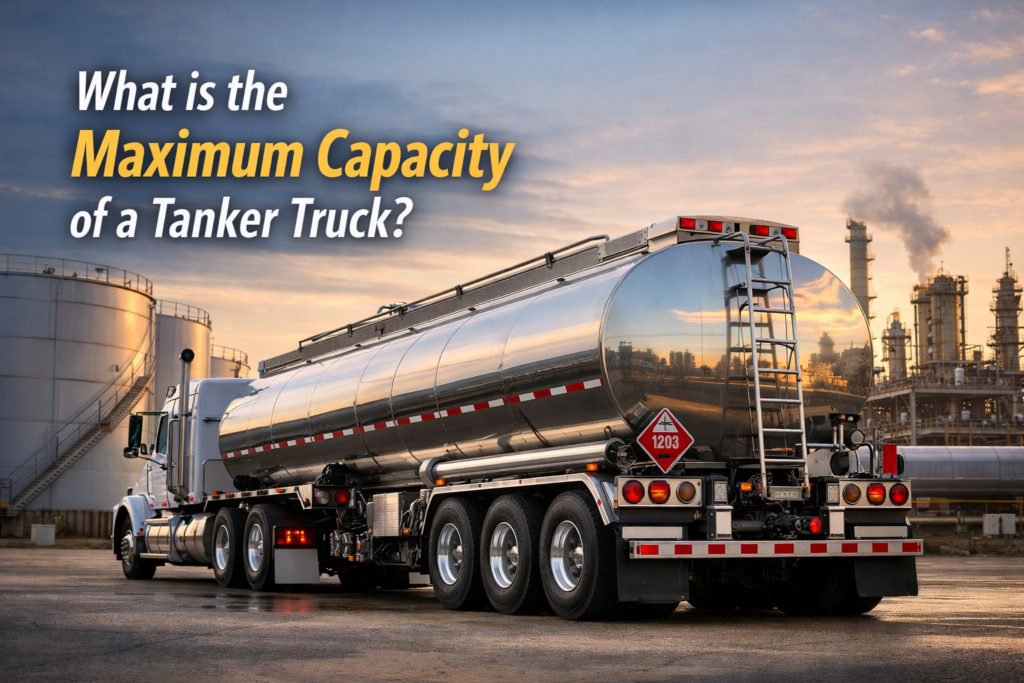
Types of Tanker Trucks and Typical Capacities
Fuel tankers transport gasoline and diesel, with typical capacities depending on local regulations and axle configuration. For a more detailed fuel-specific breakdown, see our guide on fuel tanker truck capacity in gallons.
- Fuel Tankers – These trucks transport gasoline and diesel, with typical capacities ranging from 15,000 to 30,000 liters. Fuel tankers are built with corrosion-resistant and leak-proof designs to ensure safety during transport.
- Chemical Tankers – Used for hazardous chemicals like acids and solvents, chemical tankers have capacities of 10,000–25,000 liters. Multi-compartment designs improve safety and prevent liquid mixing.
- Food-Grade Tankers – Carrying milk, edible oils, or juice, these tankers typically hold 8,000–20,000 liters. Stainless steel tanks meet food safety standards and help maintain product quality.
Sources: GB7258-2017, International Road Transport Union (IRU)
Maximum Capacity Standards
The maximum capacity of a tanker truck depends on axle configuration, liquid type, and legal regulations. Below is a standard reference table:
| Type | Axle Configuration | Maximum Payload |
|---|---|---|
| Single-Axle Tanker | 1 | 10–15 tons |
| Double-Axle Tanker | 2 | 15–25 tons |
| Tri- or Multi-Axle Tanker | 3+ | 30–50 tons |
In countries like China, the legal maximum gross vehicle weight is 49 tons, and liquid payload must be calculated based on density. Overloading a tanker truck can lead to serious safety risks and legal penalties.
Reference: Ministry of Transport of China, “Regulations on Road Transport of Dangerous Goods” (2020)
Factors Affecting Maximum Payload
Several factors influence the maximum payload of a tanker truck:
- Liquid Density – Denser liquids like sulfuric acid reduce the total load, while lighter liquids such as gasoline allow more volume.
- Vehicle Design – Thick walls, multiple compartments, and explosion-proof features affect tanker truck capacity.
- Legal Restrictions – Road limits and axle-load regulations can limit the actual payload.
- Safety Reserve – Leaving 10–15% of the tank volume empty ensures safe transport and prevents overflow.
Proper planning based on these factors ensures that a tanker truck operates within its safe capacity limits.
Safety Guidelines for Tanker Truck Transport
Maintaining the tanker truck maximum capacity is not enough; safety protocols are essential, especially for flammable or hazardous liquids:
- Anti-Static Grounding – Prevents sparks during loading or transit.
- Pressure Relief Valves – Maintain stable tank pressure and prevent leaks.
- Regular Maintenance – Includes inspections of tanks, valves, and tires.
- Qualified Drivers – Drivers must hold hazardous materials transport certification and undergo ongoing training.
Following these safety measures ensures that tanker trucks operate efficiently and within legal limits.
Frequently Asked Questions (FAQ)
Q1: What is the average maximum capacity of a tanker truck?
A1: A tanker truck can typically carry 10–50 tons, depending on axle configuration and cargo type.
Q2: Does the type of liquid affect tanker truck capacity?
A2: Yes. Denser liquids reduce the amount a tanker truck can carry safely, while lighter liquids increase volume capacity.
Q3: Are there legal limits on tanker truck maximum capacity?
A3: Yes. Countries enforce maximum vehicle weight and axle-load regulations. For example, China sets a total weight limit of 49 tons.
Q4: How much empty space should be left in a tanker truck?
A4: Generally, 10–15% of the tank volume should remain empty to accommodate liquid expansion and movement.
Q5: What safety measures are required for hazardous liquid transport?
A5: Anti-static grounding, pressure relief systems, inspections, proper driver certification, and adherence to international and local regulations are essential.
Conclusion
The tanker truck maximum capacity depends on vehicle type, cargo density, regulatory limits, and safety considerations. Logistics companies must understand these factors to operate efficiently and safely. Regular maintenance, qualified personnel, and adherence to regulations are critical to ensuring reliable and secure tanker truck transport.