
If you work in freight, logistics, or fleet operations, trailer size is more than just a specification on paper. It affects payload capacity, route planning, fuel use, loading efficiency, and even whether a truck can legally use certain roads.
Whether you’re shipping goods, buying equipment, or comparing trailer options, understanding standard trailer truck dimensions can help you make better decisions.
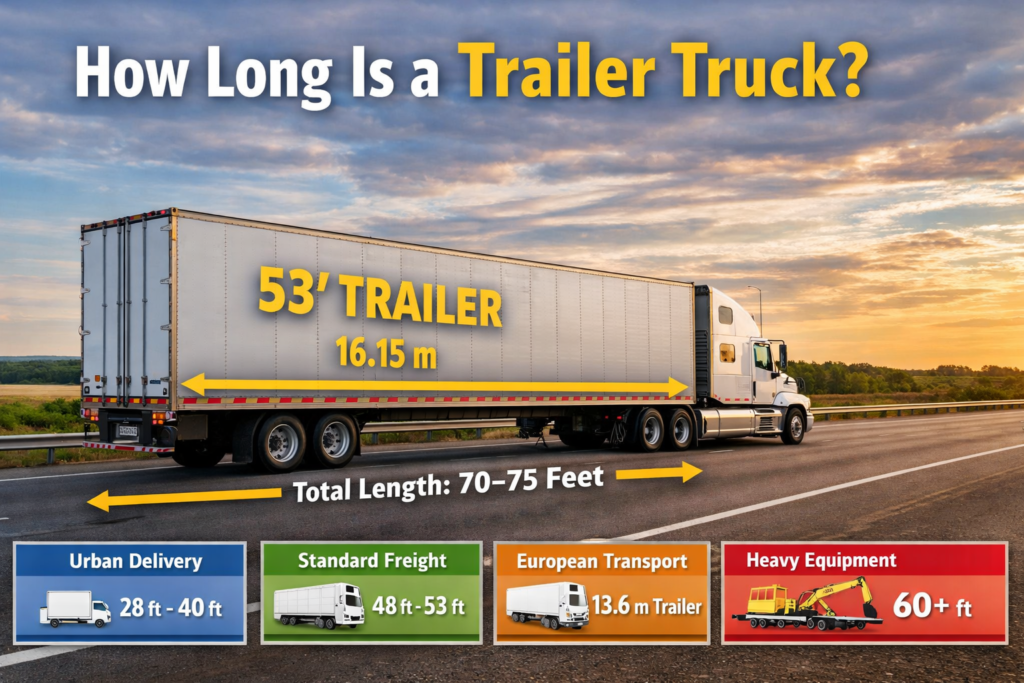
What Is a Trailer Truck?
A trailer truck is a commercial vehicle made up of two main parts:
- A tractor unit (the front cab that provides power)
- A trailer (the cargo-carrying section)
This setup is commonly used for:
- Long-distance freight
- Container transport
- Temperature-controlled deliveries
- Construction and heavy equipment hauling
Depending on the region, people may also call it a:
- Semi-truck
- Tractor-trailer
- Articulated lorry
How Long Is a Standard Trailer Truck?
Most trailer trucks measure between 40 and 72 feet (12 to 22 meters) in total length.
The exact size depends on:
- Trailer type
- Tractor cab design
- Cargo requirements
- Local transport laws
Common Trailer Lengths
| Trailer Type | Length | Metric Equivalent | Typical Use |
|---|---|---|---|
| Short delivery trailer | 28 ft | 8.5 m | Urban distribution |
| Standard dry van | 48 ft | 14.6 m | General freight |
| Long-haul trailer | 53 ft | 16.15 m | Interstate shipping |
| EU semi-trailer | 44.6 ft | 13.6 m | European freight |
| Extended trailer | 60–80+ ft | 18–24+ m | Oversized cargo |
In the U.S., 53-foot trailers are the most common for long-haul freight. In Europe, 13.6-meter semi-trailers are widely used.
How Trailer Truck Length Is Measured
The total length of a trailer truck includes both the cab and the trailer.
Formula
Total length = tractor unit + trailer
Typical Tractor Length
Most tractor units fall into these ranges:
- Day cab: 20–23 ft (6–7 m)
- Sleeper cab: 23–26 ft (7–8 m)
Typical Trailer Length
Common trailer lengths include:
- 28 ft for regional delivery
- 48 ft for standard freight
- 53 ft for long-distance hauling
Example
A standard North American setup might look like this:
- Sleeper cab: 23 ft
- Trailer: 53 ft
- Total: around 76 ft
In Europe, overall vehicle length is usually capped between 16.5 and 18.75 meters, depending on configuration.
For a more detailed breakdown of trailer width, height, and weight limits, see our complete Semi Trailer Dimensions Guide.
Common Types of Trailer Trucks
Dry Van Trailer
Dry vans are enclosed trailers used for everyday freight.
Typical dimensions:
- Length: 48–53 ft
- Width: 8.5 ft
- Height: 13.5 ft
Best for:
- Retail goods
- E-commerce shipments
- Packaged cargo
Flatbed Trailer
Flatbeds are open trailers designed for oversized loads.
If you’re comparing trailer options for freight, our guide on Flatbed Semi Trailer vs. Drawbar Trailer may help.
Typical dimensions:
- Length: 48–53 ft
Best for:
- Steel
- Lumber
- Construction materials
Refrigerated Trailer (Reefer)
Reefers are insulated trailers with temperature control.
Typical dimensions:
- Length: 48–53 ft
Best for:
- Food products
- Medicine
- Perishable cargo
Lowboy Trailer
Lowboy trailers are built for heavy or tall equipment.
For oversized loads, it also helps to understand the difference between RGN and lowboy trailers.
Typical dimensions:
- Length: 24–29 ft (extendable models available)
Best for:
- Excavators
- Bulldozers
- Industrial machinery
What Affects Trailer Truck Length?
Trailer length is not just about cargo space. Several factors influence what size makes sense.
Road Regulations
Different countries have different limits.
- United States: 53-ft trailers are common on interstate highways
- Europe: stricter total vehicle length rules apply
- Australia: road trains can exceed 25 meters
Always check local transport regulations before choosing equipment.
Cargo Type
The cargo often determines the trailer.
For example:
- Standard goods: dry van
- Heavy machinery: lowboy or flatbed
- Frozen goods: reefer
Loading and Maneuverability
Longer trailers can improve efficiency, but they also come with trade-offs.
Benefits:
- More cargo per trip
- Better load utilization
Challenges:
- Larger turning radius
- More difficult parking
- Reduced access in tight urban areas
Why Trailer Length Matters
Choosing the right trailer size can help you:
- Improve load planning
- Reduce delivery costs
- Lower fuel spend per shipment
- Avoid route restrictions
- Improve delivery speed
For example:
- A 53-foot trailer may be ideal for highway freight
- A 28-foot trailer is often more practical in city traffic
The right choice depends on your operation, not just maximum length.
How to Choose the Right Trailer Size
Before selecting a trailer, consider:
- Cargo dimensions and weight
- Delivery distance
- Road access and turning space
- Dock height and loading needs
- Local legal limits
General Recommendations
- City deliveries: 28–40 ft
- General freight: 48–53 ft
- Cross-border EU transport: 13.6 m trailers
- Heavy equipment: lowboy or extended flatbed
FAQ
How long is a trailer truck on average?
Most trailer trucks are between 40 and 72 feet long, depending on the trailer type and region.
What is the most common trailer length?
In North America, 53 feet is the most common. In Europe, 13.6 meters is the standard for many freight trailers.
Does trailer length include the cab?
Yes. Total vehicle length includes both the tractor unit and the trailer.
Are longer trailers always better?
Not always. Longer trailers can carry more freight, but they may be harder to maneuver and may not suit urban routes.
Does trailer size affect fuel costs?
Yes. Larger trailers typically use more fuel, but they can lower cost per shipment by increasing load capacity.
What trailer size works best for city deliveries?
For urban routes, shorter trailers—usually 28 to 40 feet—are easier to handle and park.
Final Thoughts
Trailer truck length depends on the type of freight, the route, and local transport rules. While larger trailers can improve efficiency, the best setup is the one that fits your daily operation.
For most businesses:
- Urban delivery: 28–40 ft
- Standard freight: 48–53 ft
- European transport: 13.6 m trailers
Choosing the right trailer size can help reduce costs, improve efficiency, and keep deliveries running on schedule.