
Semi trailers are widely used in road freight transport and play a key role in moving goods efficiently. Understanding their dimensions and load limits helps ensure safe operations, proper cargo planning, and compliance with transport regulations. This guide outlines the common sizes, types, and capacity considerations for semi trailers.
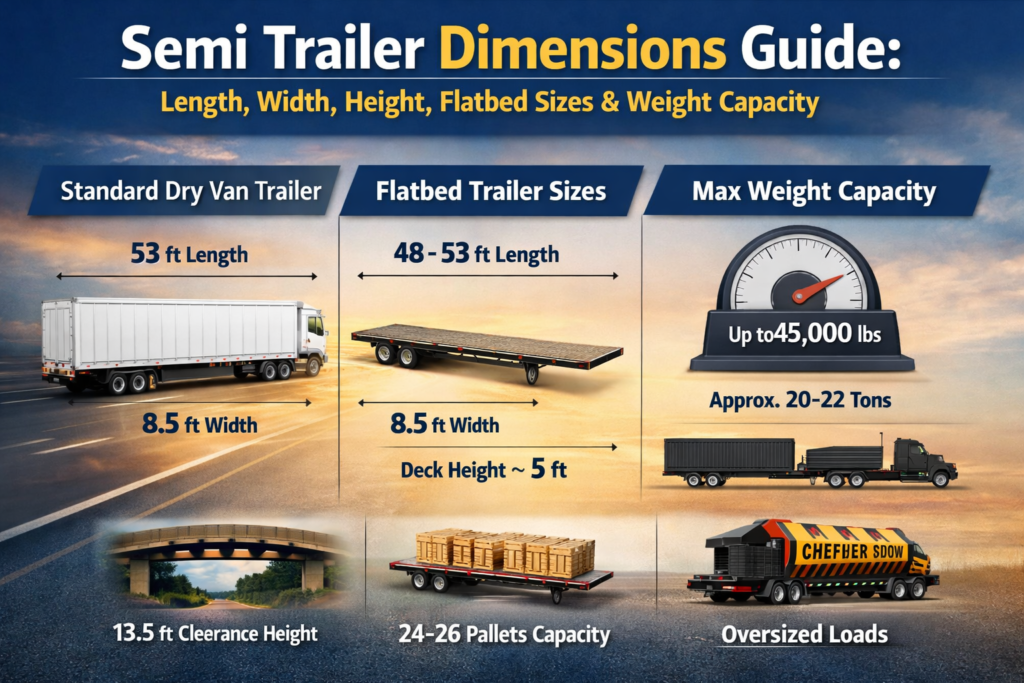
Standard Semi Trailer Dimensions
While specifications can vary by manufacturer and region, most semi trailers follow similar general dimensions.
Dry Van Trailer (Enclosed Trailer)
- Length: Typically 48 to 53 feet
- Width: About 8.5 feet (102 inches)
- Interior Width: Around 8.2 feet
- Overall Height: Approximately 13.5 feet
- Interior Height: Around 9 feet
Dry van trailers are commonly used for transporting palletized goods, boxed cargo, and general freight that needs protection from weather and external conditions.
Flatbed Trailer Dimensions and Types
Flatbed trailers are designed without sidewalls or a roof, making them suitable for cargo that is large, heavy, or irregularly shaped. For heavy equipment transport, buyers should also compare lowbed trailers vs flatbed trailers before choosing a deck structure.
Standard Flatbed Dimensions
- Length: Usually 48 to 53 feet
- Width: About 8.5 feet
- Deck Height: Roughly 5 feet above ground
- Usable Deck Length: Around 47 to 52 feet
Common Flatbed Variations
- Step Deck (Drop Deck): Has two deck levels, allowing taller cargo than standard flatbeds
- Double Drop Trailer: Features an even lower middle section for oversized equipment
- Extendable Flatbed: Can be lengthened to carry long items such as pipes or beams
- Step deck, double drop, extendable flatbed, RGN, and lowboy designs all solve different clearance and loading problems. If loading heavy machinery is the key issue, this RGN trailer vs lowboy trailer comparison can help narrow the choice.
Height Limits and Clearance
Height is a critical factor in transport planning, especially when routes include bridges, tunnels, or overhead structures.
- In many regions, the maximum legal height is around 13.5 feet (4.1 meters)
- Some areas allow slightly taller configurations, depending on local regulations
Loads that exceed standard height limits typically require permits and careful route planning to avoid obstacles.
Weight Capacity and Load Limits
Weight limits are set to ensure road safety and protect infrastructure.
Key Terms
- Gross Vehicle Weight Rating (GVWR): Maximum combined weight of the truck, trailer, and cargo
- Payload Capacity: Maximum weight of cargo the trailer can carry
- Axle Load Limit: Maximum weight allowed on each axle
Typical Figures
- Maximum GVWR: Around 80,000 pounds (36,000 kg) in many regions
- Empty Trailer Weight: Approximately 10,000 to 15,000 pounds
- Payload Capacity: Usually up to about 45,000 pounds, depending on configuration
Actual limits may vary depending on axle spacing, number of axles, and local regulations.
Selecting the Appropriate Trailer
Choosing the right trailer depends on cargo type, route, loading method, and legal limits. For businesses comparing long-distance heavy haul with short-haul distribution, the flatbed semi trailer vs drawbar trailer guide gives a more practical business-use comparison.
- Cargo size and shape: Determines whether an enclosed or open trailer is needed
- Weight: Must stay within legal and mechanical limits
- Loading method: Some cargo requires side or top loading, favoring flatbeds
- Route conditions: Height and weight restrictions along the route must be considered
Careful planning helps prevent delays, fines, or safety issues during transport.
Summary of Common Trailer Types
| Trailer Type | Length (ft) | Width (ft) | Height (ft) | Typical Use |
|---|---|---|---|---|
| Dry Van | 48–53 | 8.5 | 13.5 | General enclosed freight |
| Flatbed | 48–53 | 8.5 | Deck ~5 ft | Oversized or irregular cargo |
| Step Deck | 48–53 | 8.5 | Lower deck | Taller cargo |
| Refrigerated | 48–53 | 8.5 | 13.5 | Temperature-controlled goods |
FAQ
What is the most common semi trailer length?
The most widely used length is 53 feet, especially for long-haul freight, though 48-foot trailers are also common.
What is the standard width of a semi trailer?
Most trailers have a maximum width of 8.5 feet (102 inches).
How tall can a semi trailer be?
A typical maximum height is about 13.5 feet, including the cargo.
How much weight can a semi trailer carry?
Payload capacity generally reaches around 45,000 pounds, depending on the trailer type and configuration.
When should a flatbed trailer be used?
Flatbed trailers are suitable for cargo that is too large, heavy, or irregular to fit inside an enclosed trailer.
Do oversized loads require special arrangements?
Yes, oversized or overweight loads often require permits, route planning, and sometimes escort vehicles.