
Pneumatic trailers are widely used for transporting dry bulk materials such as cement, lime, flour, and plastic granules. Unlike Tipper Semi Trailer that rely on gravity, pneumatic trailers use compressed air to unload materials efficiently, even into elevated storage systems like silos.
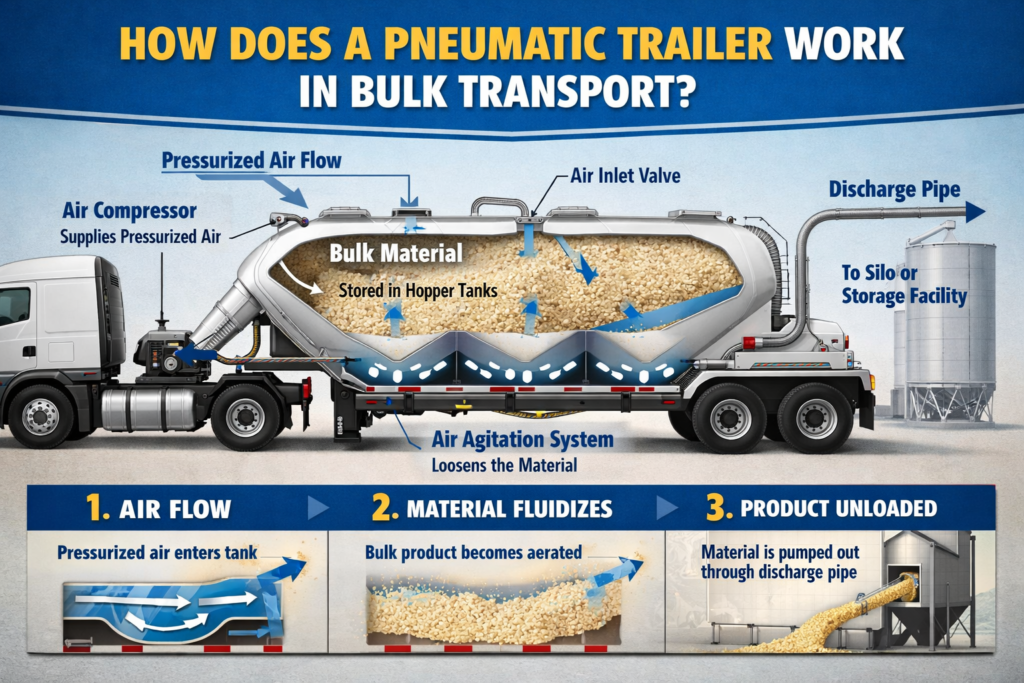
What Is a Pneumatic Trailer?
A pneumatic trailer is a sealed tank mounted on a chassis for dry bulk materials. If the cargo is liquid instead of powder or granules, buyers should compare tank semi trailers for liquid transportation because the tank structure, valves, and safety requirements are different.
Because the tank is enclosed, the material remains protected from contamination and moisture. At the same time, the unloading process produces minimal dust, making it suitable for both industrial and food-grade applications.
Main Components of a Pneumatic Trailer
A pneumatic trailer consists of several key components that work together to ensure efficient operation.
Tank (Pressure Vessel)
The tank is built from aluminum or steel and designed to withstand internal pressure. It often includes multiple compartments to help distribute weight evenly and, in some cases, carry different materials.
Air Compressor
The air compressor supplies the pressurized air needed for unloading. It is usually powered by the truck’s engine through a power take-off (PTO) system.
Aeration Pads
Located at the bottom of the tank, these pads allow air to pass through the material. This helps reduce resistance and allows the product to flow more easily.
Piping and Valves
A network of pipes and valves directs airflow and controls how material moves through the system. Operators use these controls to manage pressure and flow during unloading.
Discharge System
The discharge line and hose connect the trailer to the receiving facility, such as a silo. This is where the material exits the trailer.
How a Pneumatic Trailer Works
The operation of a pneumatic trailer can be understood in a series of steps.
Loading
Material is loaded into the tank through hatches on the top. Gravity is used to fill the compartments, and the system is sealed once loading is complete.
Pressurization
During unloading, the air compressor introduces compressed air into the tank. This increases internal pressure and prepares the material for movement.
Fluidization
Air is pushed through the aeration pads, causing the dry bulk material to behave more like a fluid. This reduces friction and prevents clogging.
Discharge
The pressurized material is forced out through the discharge piping and into a hose connected to a storage silo or container.
Control
Throughout the process, the operator adjusts valves to maintain stable pressure and ensure a steady flow of material.
Types of Pneumatic Trailers
Different trailer designs are used depending on the application.
Hopper Bottom
These trailers have sloped interiors that help guide material toward the discharge point, making unloading more efficient.
Straight Tank
A cylindrical design that allows for larger volume capacity, often used for long-distance transport.
Multi-Compartment
These trailers are divided into sections, allowing different materials to be transported in a single trip without mixing.
Low-Profile
Designed for areas with height restrictions, these trailers offer easier access in confined environments.
Advantages of Pneumatic Trailers
Pneumatic trailers offer several practical benefits:
- Clean unloading with minimal dust
- Ability to discharge material over long distances or into elevated storage
- Reduced need for manual handling
- Suitable for sensitive or fine materials
- Consistent and controlled flow during unloading
Common Applications
These trailers are used across a range of industries:
- Construction: cement, fly ash, sand
- Food processing: flour, sugar, starch
- Chemical manufacturing: powders and granules
- Agriculture: feed and fertilizers
Maintenance and Safety Considerations
To ensure reliable operation, regular maintenance is essential:
- Check pressure relief valves and seals
- Monitor compressor performance
- Keep aeration pads clean and functional
- Inspect hoses and connections for wear or leaks
- Follow proper safety procedures when working with pressurized systems
Pneumatic trailers provide an efficient and controlled way to transport and unload dry bulk materials. By using compressed air and a well-designed system of components, they allow materials to move smoothly from the trailer to storage without the need for tipping or manual handling. This combination of efficiency, cleanliness, and versatility makes them a key part of modern bulk transport operations.
FAQ
What materials are typically transported using pneumatic trailers?
They are commonly used for dry bulk materials such as cement, lime, flour, plastic pellets, and various powders.
How does a pneumatic trailer unload material?
It uses compressed air to pressurize the tank and push the material through pipes and hoses into a storage system.
How long does unloading usually take?
Unloading time generally ranges from 30 minutes to an hour, depending on the material and operating conditions.
What pressure is used during unloading?
Most systems operate within a relatively low pressure range, typically around 12–15 PSI.
Why is fluidization important?
Fluidization allows the material to flow more easily, reducing blockages and improving unloading efficiency.
Are pneumatic trailers suitable for food products?
Yes, many are designed to meet hygiene standards and are used for transporting food-grade materials.