
Milk transportation isn’t just about moving liquid from point A to point B—it’s about preserving freshness, ensuring food safety, and keeping your operation efficient. For a broader overview of tankers used for fuel, chemicals, food products, and gases, see our liquid transportation semi trailer guide.
Below is a practical, experience-driven guide to help you make the right decision.
Start with Your Actual Milk Transportation Needs
Before comparing different options, it’s important to understand your day-to-day operations. The best trailer for milk transportation for small farms will look very different from what a large dairy processor needs.
If you’re handling short-distance collection routes, a smaller tanker with quick loading and unloading might be enough. On the other hand, long-distance milk transportation trailer solutions require better insulation, larger capacity, and more advanced temperature control.
Think about:
- How far the milk needs to travel
- How frequently you collect or deliver
- Whether you transport raw milk or processed dairy
Having clarity here helps avoid overspending or under-specifying your equipment.
Choose the Right Type of Milk Tanker Trailer
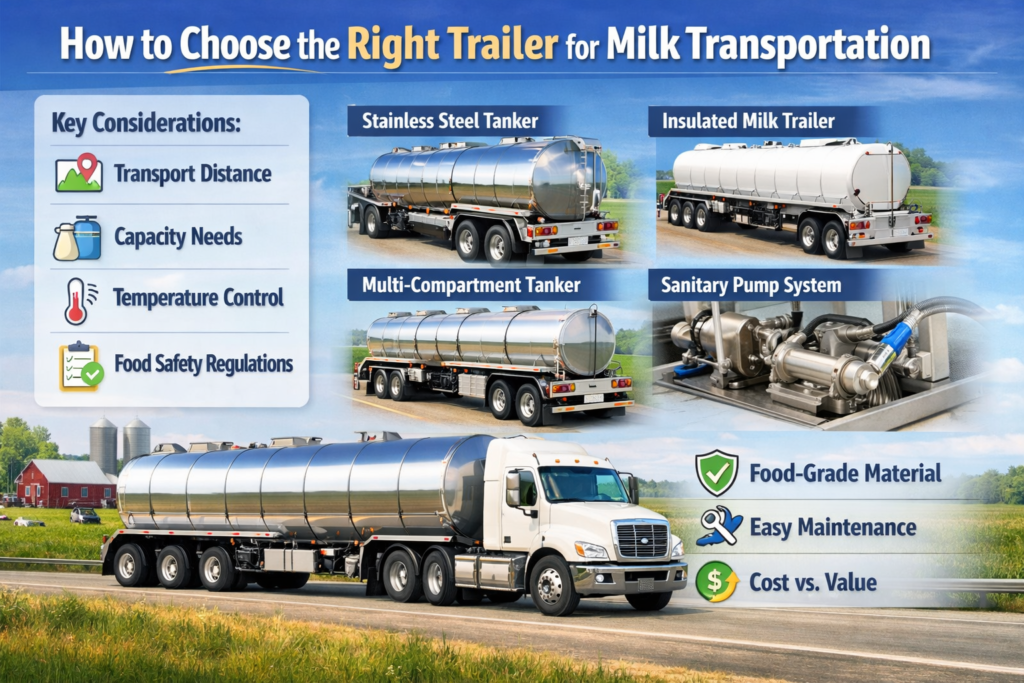
Not all trailers are built the same, and choosing the right type is key. Many buyers look for the best stainless steel milk tanker trailer for dairy transport, and for good reason.
Stainless steel tankers are widely used because they are durable, hygienic, and easy to clean. If your routes are longer or temperatures vary, insulated milk tanker trailers for long-distance transport are a better fit, as they help maintain stable internal conditions.
For operations that collect milk from multiple farms, multi-compartment milk tanker trailers for dairy collection offer flexibility. You can keep batches separate, which is useful for quality control and traceability.
Pay Attention to Food-Grade Materials and Hygiene Design
In dairy transport, hygiene isn’t negotiable. Choosing a food-grade stainless steel milk transport trailer ensures that the milk remains uncontaminated throughout the journey.
Look for:
- Smooth internal tank surfaces that prevent residue buildup
- High-quality stainless steel such as 304 or 316
- Sealed piping and sanitary valves
Many modern tankers also include CIP (clean-in-place systems for milk tanker trailers), which make cleaning faster and more reliable without dismantling equipment.
Temperature Control Is Critical for Milk Quality
Milk is highly sensitive to temperature changes, which is why milk tanker trailers with temperature control systems are essential.
In most cases, milk needs to stay below 4°C (39°F). To achieve this, a good trailer should have:
- Effective insulation layers
- Optional cooling or refrigeration units
- Built-in temperature monitoring systems
If you operate in warmer regions, investing in insulated milk trailers for hot climate dairy transport can significantly reduce spoilage risks.
Select the Right Capacity and Tank Configuration
When selecting milk tanker capacity, do not look only at tank volume. Actual payload must consider milk density, axle load, route limits, and tanker truck maximum capacity regulations in the operating market.
Capacity should match your operation—not exceed it unnecessarily. Many buyers search for the right capacity milk tanker trailer for dairy farms, but the answer depends on scale.
For example:
- Small farms may need 5,000–15,000 liters
- Medium operations often use 15,000–30,000 liters
- Large processors may require 30,000 liters or more
Additionally, compartmentalized milk tanker trailers for efficient dairy logistics can help optimize routes and reduce contamination risks when handling milk from multiple sources.
Make Sure the Trailer Meets Food Safety Regulations
Compliance is a major factor when choosing a milk transportation trailer that meets food safety standards.
Depending on your region, this may include:
- FDA requirements in the United States
- EU food transport regulations
- Local dairy safety certifications
A compliant trailer should include proper sealing systems, traceability features, and certified materials. This not only protects consumers but also avoids costly legal issues.
Evaluate Pumping and Unloading Efficiency
Efficient handling systems can save time and labor. Many operators now prioritize milk tanker trailers with sanitary pumping systems and bottom unloading.
Key features to look for:
- Food-grade pumps that maintain hygiene
- Bottom loading/unloading systems for safety
- Easy-to-operate valves and controls
These features are especially valuable in high-frequency collection environments.
Consider Long-Term Durability and Maintenance
A trailer is a long-term investment, so it’s worth considering durable milk tanker trailers with low maintenance costs.
Check for:
- Strong chassis and suspension systems
- Corrosion resistance, especially in humid environments
- Availability of spare parts and service support
Also think about cleaning time and maintenance frequency, as these directly affect operational efficiency.
Balance Price with Long-Term Value
It’s tempting to go for the lowest price, but experienced buyers focus on cost-effective milk transportation trailers with long service life.
A cheaper trailer may lead to:
- Higher maintenance costs
- Shorter lifespan
- Greater risk of contamination or breakdown
Spending slightly more upfront often results in better reliability and lower total cost over time.
Work with a Trusted Milk Tanker Trailer Manufacturer
Finally, choosing the right supplier matters just as much as choosing the trailer itself. Many buyers look for a reliable milk tanker trailer manufacturer with customization options.
A good manufacturer should offer:
- Industry experience and proven designs
- Customization based on your needs
- Technical support and after-sales service
This ensures that your trailer performs well not just on day one, but for years to come.
Final Thoughts
Choosing the right trailer for milk transportation comes down to understanding your operation and focusing on what truly matters—hygiene, temperature control, capacity, and reliability.
By investing in a well-designed, food-grade milk tanker trailer, you’re not just buying equipment—you’re protecting product quality, improving efficiency, and building a more resilient dairy business.
FAQ: Milk Transportation Trailer Selection
1. What is the best trailer for transporting raw milk safely?
The best trailer for transporting raw milk safely is typically an insulated stainless steel tanker with food-grade materials and a sealed system. It should also include temperature monitoring to keep milk below 4°C.
2. How do I choose the right capacity milk tanker trailer?
To choose the right capacity milk tanker trailer for your dairy business, consider your daily collection volume, transport distance, and delivery frequency. Avoid oversizing, as it increases costs without improving efficiency.
3. Are insulated milk tanker trailers necessary for short distances?
For very short routes, insulation may not be critical. However, many operators still prefer insulated milk tanker trailers for short-distance transport to maintain consistent quality and reduce risk during delays.
4. What material is best for milk transport trailers?
The industry standard is food-grade stainless steel (304 or 316) for milk tanker trailers, as it resists corrosion, is easy to clean, and meets hygiene requirements.
5. How often should a milk tanker trailer be cleaned?
Cleaning frequency depends on usage, but generally, milk tanker trailers should be cleaned after every load using a proper CIP system to prevent bacterial growth and contamination.
6. What features improve milk transportation efficiency?
Key features include milk tanker trailers with bottom unloading systems, sanitary pumps, and multi-compartment tanks. These improve handling speed, reduce contamination risk, and optimize logistics.
7. How much does a milk transportation trailer cost?
The cost varies widely depending on size, insulation, and features. When evaluating the price of milk tanker trailers for dairy transport, focus on long-term value rather than just the initial purchase price.