
Choosing a chemical tank trailer isn’t just about specifications on paper—it’s about finding equipment that fits your day-to-day operations, keeps your cargo safe, and performs reliably over time. With so many options available, the key is to focus on what truly matters for your type of transport.
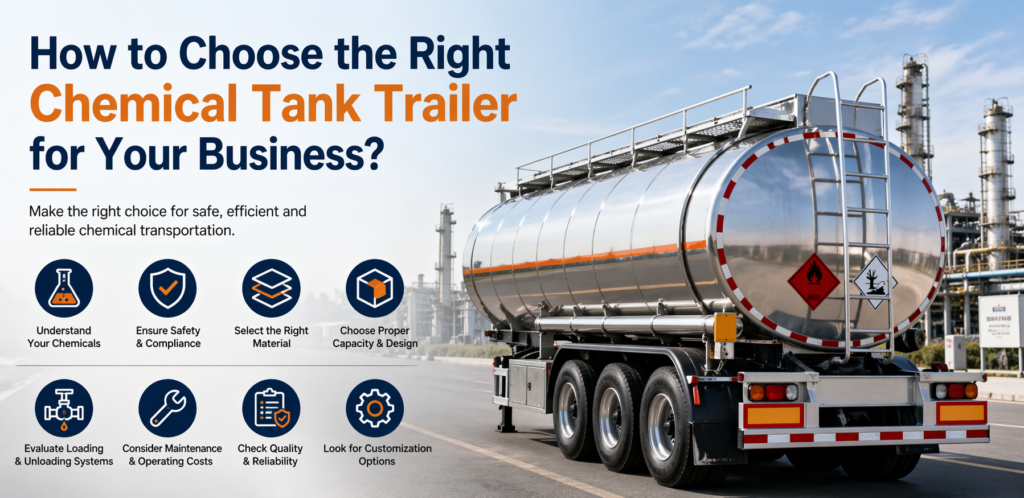
Start with the Nature of Your Cargo
Every decision begins with the chemical itself. Liquids can behave very differently depending on their properties, and comparing the main types of liquid transport semi trailers can help you decide whether a chemical tanker is the right configuration.
For instance, transporting acids requires materials that won’t degrade over time, while flammable liquids call for additional safety precautions such as grounding and proper ventilation. Having a clear understanding of what you’re carrying helps avoid costly mismatches later on.
Choose a Material That Matches the Job
Tank material has a direct impact on durability and safety. Stainless steel is often the go-to option because it handles a wide range of chemicals and resists corrosion well. It’s a solid long-term investment for businesses dealing with varied cargo.
Aluminum, on the other hand, is lighter and can help reduce fuel consumption. It’s commonly used for less aggressive liquids. Carbon steel is usually the most economical choice, but it’s better suited for non-corrosive substances.
There’s no single “best” material—only what works best for your specific application.
Think About Capacity and Practical Use
Bigger isn’t always better. While a larger tank can reduce the number of trips, the practical limit still depends on road regulations, cargo density, and tanker truck maximum capacity.
If your operations involve transporting different liquids at the same time, a multi-compartment design might be worth considering. It adds flexibility and can improve overall efficiency without requiring separate trips.
Don’t Overlook Safety Requirements
Safety should never be treated as an add-on. A well-designed chemical tank trailer includes features that help prevent accidents and protect both the operator and the environment.
This typically includes systems to control pressure, prevent overfilling, and allow quick shut-off in emergencies. For flammable cargo, proper grounding is essential to reduce the risk of static discharge.
It’s also important to ensure the trailer meets the regulations of the regions where it will be used. Compliance isn’t just about paperwork—it’s part of safe operation.
Consider How the Trailer Will Be Used Daily
Loading and unloading might seem like routine tasks, but the design of the system can make a big difference in efficiency. Bottom discharge setups are often preferred for their speed and control, while some materials may require more specialized handling methods.
Thinking through these daily processes in advance can save time and reduce operational headaches later.
Look Beyond the Purchase Price
It’s easy to focus on upfront cost, but long-term performance is what really matters. A cheaper trailer may require more frequent repairs or downtime, which can quickly offset any initial savings.
Reliable construction, easy maintenance, and access to spare parts all contribute to smoother operations over time. In many cases, investing a bit more at the beginning leads to better value in the long run.
When Standard Isn’t Enough
Not every operation fits a standard configuration. Depending on what you transport, you may need additional features such as insulation, specialized linings, or monitoring systems.
Working with a manufacturer that understands these requirements can make a big difference. Customization ensures the trailer works the way you need it to, rather than forcing your process to adapt to the equipment.
Final Thoughts
A chemical tank trailer is more than just a transport unit—it’s part of your overall operation. Taking the time to choose carefully means fewer problems, better efficiency, and greater peace of mind on the road.
By focusing on the type of cargo, material compatibility, safety features, and long-term reliability, you can make a decision that supports your business well into the future.
Frequently Asked Questions
What material is generally the most reliable for chemical tank trailers?
Stainless steel is often preferred because it performs well with many types of chemicals and offers strong resistance to corrosion. That said, the right choice always depends on what you’re transporting.
How do I decide on the right tank size?
It usually comes down to your transport volume and routes. Larger tanks can improve efficiency for long-distance hauling, while smaller ones may be more practical for frequent or local deliveries.
Is a multi-compartment tank always necessary?
Not necessarily. It’s useful if you regularly carry different liquids at the same time. Otherwise, a single compartment is simpler and often more economical.
What are the most important safety features to look for?
Basic features include pressure control systems, overfill protection, and emergency shut-off options. For certain types of cargo, grounding systems are also essential.
Can trailers be adapted for specific needs?
Yes. Many can be built or modified with features like insulation, internal coatings, or monitoring equipment to suit particular transport conditions.
How often should maintenance be carried out?
Regular inspections are important, even if the trailer appears to be in good condition. The exact schedule depends on usage and the type of chemicals handled, but consistency is key to keeping everything running safely.