
Buying a water sprinkler truck isn’t just about picking a model with the biggest tank or the lowest price. In practice, the right choice depends on how the truck will actually be used, how often it will operate, and what kind of working conditions it will face.
If you’ve been searching for how to choose a water sprinkler truck, this guide walks through the key decisions in a clear, practical way—based on real usage rather than just specifications.
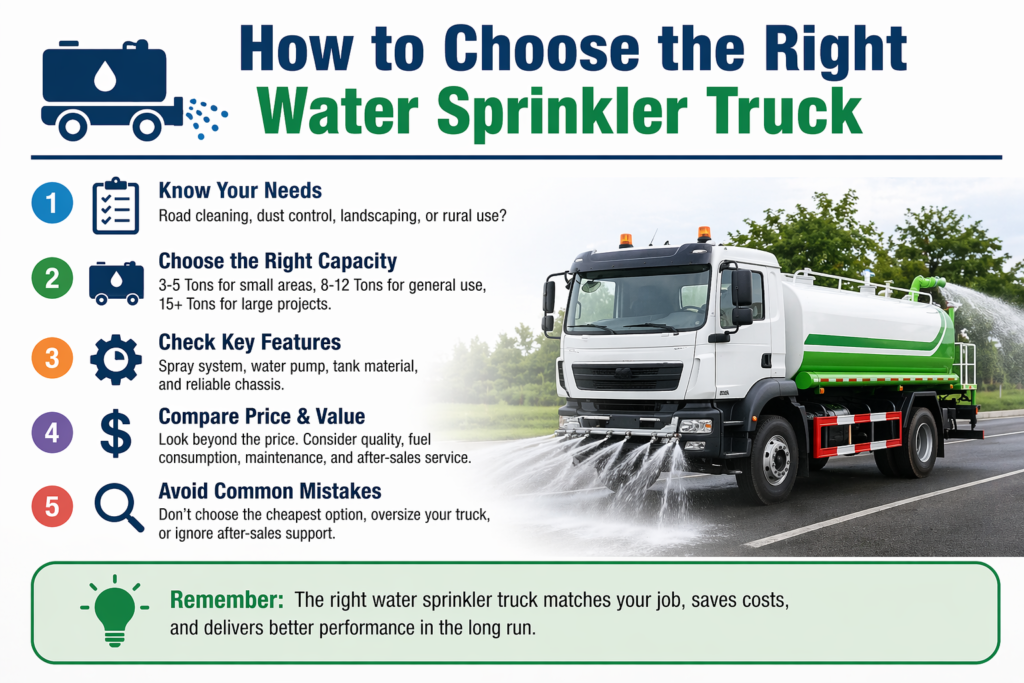
Start with the Job: What Will the Truck Be Used For?
Before looking at models or prices, it’s worth taking a step back and defining the job. The same water sprinkler truck won’t perform equally well across different scenarios.
For city road cleaning, consistency and coverage matter most. An 8–12 ton water sprinkler truck is often the standard choice because it can cover a large area without being too difficult to maneuver in traffic or narrower streets.
On construction sites, dust control usually calls for a higher-capacity water sprinkler truck with stronger pressure. These trucks often work alongside dump trailers for construction and mining to support earthmoving, roadwork, and bulk material handling operations.
Landscaping work tends to be more controlled. A mid-sized water sprinkler truck with adjustable spray options is usually enough, especially when watering plants or green areas where too much pressure can do more harm than good.
For smaller communities or rural areas, a compact water sprinkler truck in the 3–5 ton range is often more practical. It’s easier to operate, consumes less fuel, and can access tighter spaces.
How to Choose the Right Tank Capacity
One of the most common questions is what size water sprinkler truck is actually needed. The answer depends less on preference and more on workload and logistics.
A small water sprinkler truck works well for short routes or areas where water sources are nearby. The trade-off is that it needs to refill more often.
Mid-sized trucks are the most widely used for a reason. They offer a balance between operating time and cost, making them suitable for general municipal or landscaping work.
Larger trucks are designed for environments where efficiency matters more than flexibility. On construction sites or large projects, fewer refills can save time, even if the initial investment is higher.
In practice, it’s better to match the tank size to daily usage rather than assuming bigger is always better. Although water sprinkler trucks are different from road tankers, the same principle applies: capacity should be checked against payload, road rules, and tanker truck maximum capacity limits.
Features That Actually Make a Difference
Specifications can look impressive on paper, but only a few components really affect how a water sprinkler truck performs day to day.
The spray system is one of them. Most trucks come with front and rear spray functions, along with a high-position water cannon. For standard road cleaning or dust suppression, this setup is usually enough. Additional features like side sprays or mist systems are useful, but only in specific situations.
The water pump is another key factor. It determines how far and how effectively the water can be delivered. A larger tank won’t help much if the pump can’t provide enough pressure or flow.
Tank material also matters, especially over time. Carbon steel is widely used because it keeps costs down, but it requires proper anti-corrosion treatment. Stainless steel costs more upfront, but in certain environments—especially humid or coastal areas—it can reduce maintenance issues later on.
The chassis is often overlooked, but it plays a big role in reliability. A well-supported chassis with easy access to parts and service can save both time and money in the long run.
What Affects the Price of a Water Sprinkler Truck?
Prices can vary quite a bit, even between trucks that look similar at first glance.
Smaller water sprinkler trucks are generally more affordable and suited for lighter workloads. Mid-range models tend to offer the best balance for most buyers, while larger trucks are built for high-efficiency operations and come with higher upfront and operating costs.
Several factors influence pricing, including the chassis brand, pump performance, tank material, and whether additional features are included. Trucks equipped with more advanced systems—like automated controls or dust suppression units—will naturally cost more.
When comparing options, it helps to look beyond the purchase price. Fuel consumption, maintenance frequency, and parts availability all contribute to the overall cost of ownership.
Common Mistakes Buyers Tend to Make
It’s easy to focus on the wrong things when comparing different models.
One of the most common mistakes is choosing based on price alone. A lower upfront cost can lead to higher expenses later if the truck isn’t durable or efficient.
Another issue is overestimating capacity needs. A larger water sprinkler truck may seem like a safer choice, but it can be harder to operate and more expensive to run if the extra capacity isn’t actually needed.
After-sales support is also important. Trucks that are difficult to service or require hard-to-find parts can become a long-term problem.
Finally, it’s worth considering how the truck will be used on a daily basis. Road width, terrain, and frequency of use all have a direct impact on what type of vehicle makes sense.
A Practical Way to Make the Right Choice
Instead of trying to compare every specification at once, it helps to break the process into steps.
Start by defining the main use case. From there, estimate how much water capacity is actually needed for a typical day. Once that’s clear, it becomes easier to narrow down the essential features.
Comparing suppliers is the next step, but it’s just as important to check the details—build quality, components, and support options. If possible, inspecting the truck or reviewing detailed specifications can prevent surprises later on.
Frequently Asked Questions
Can a water sprinkler truck be used for firefighting?
Some models can assist in emergencies, especially those equipped with high-pressure water cannons, but they are not designed to replace dedicated fire trucks.
What kind of license is needed to operate one?
This depends on the size of the truck and local regulations. Larger vehicles typically require a commercial driving license.
How often does maintenance need to be done?
Maintenance schedules vary, but regular checks of the pump, tank, and engine are essential to keep the truck operating reliably.
How long can a water sprinkler truck last?
With proper care, these trucks can remain in service for many years. Usage intensity and maintenance practices make a significant difference.
Is stainless steel a better option for the tank?
It depends on the environment. In areas where corrosion is a concern, stainless steel can reduce long-term maintenance, even though it costs more initially.
Can the spray pressure be adjusted during operation?
Most modern systems allow for pressure adjustments, making it easier to switch between different types of work.
What influences fuel consumption the most?
Fuel usage is affected by load weight, driving conditions, and how often the pump is used during operation.
Conclusion
Choosing the right water sprinkler truck comes down to understanding the job it needs to do and selecting a model that matches those requirements. Capacity, configuration, and long-term operating costs all play a role, but the best choice is usually the one that fits the actual working conditions—not just the specifications on paper.
Taking a practical approach from the beginning can help avoid unnecessary costs and ensure the truck performs reliably over time.