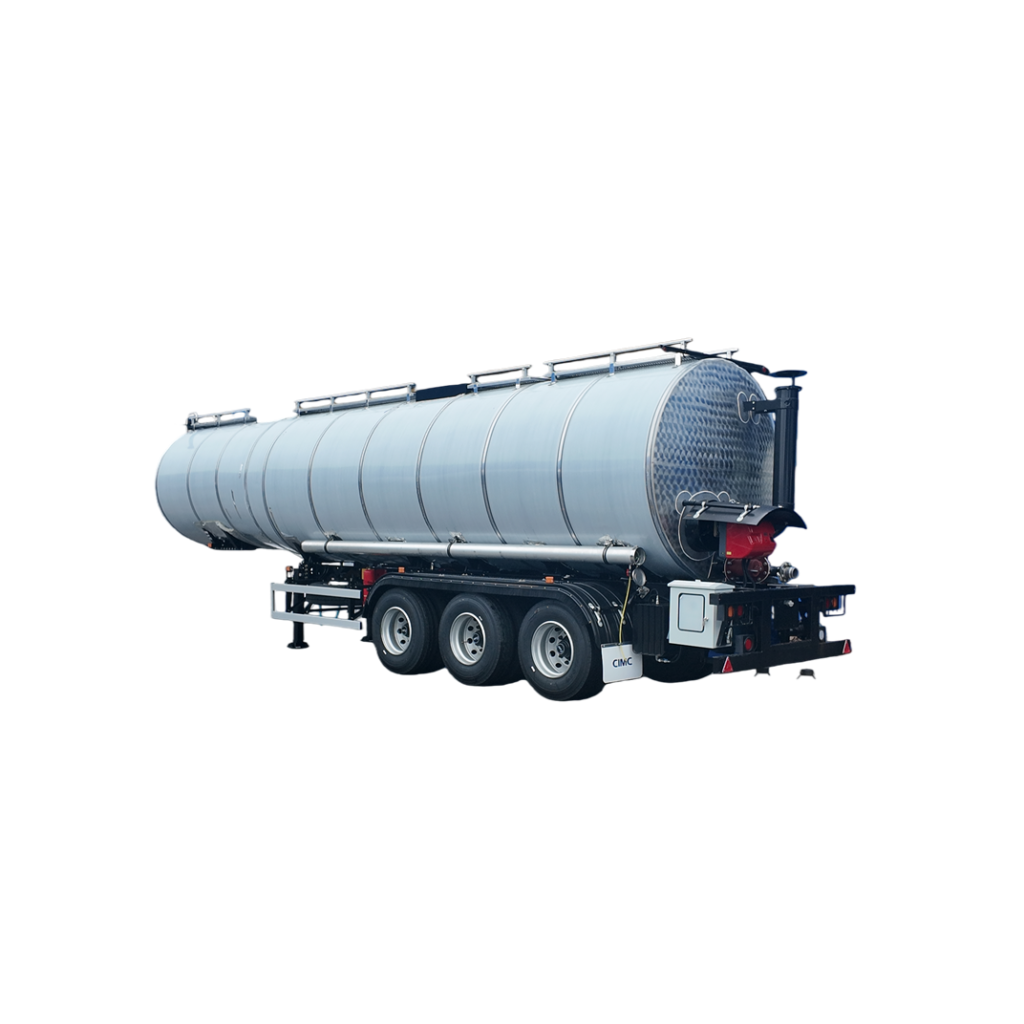
Selecting the right Heated Bitumen Tank Semi Trailer is important for safe transportation, efficient operation, and reducing long-term operating costs. Since asphalt and bitumen have high viscosity and require temperature control during transportation, the trailer configuration must match the material characteristics, transportation distance, and working environment.
Choose According to Material Requirements
The first step is to confirm the type of material being transported. Heated Bitumen Tank Semi Trailers are mainly used for hot bitumen, asphalt, and other high-temperature materials used in road construction.
For general asphalt transportation, an Asphalt Tank Semi Trailer can meet normal operating requirements. For bitumen transportation, especially for long-distance delivery, a trailer equipped with a heating system and insulation structure is recommended. It helps maintain material fluidity and prevents bitumen from cooling down and solidifying inside the tank.
Choosing the correct tank design according to the material can improve unloading efficiency and reduce operation problems.
Select the Right Tank Capacity
Tank capacity should be selected according to transportation volume, project scale, and local road regulations.
Common capacity options include:
30,000L-40,000L Heated Bitumen Tank Semi Trailer
Suitable for small and medium construction projects, regional transportation, and flexible operation.
40,000L-50,000L Heated Bitumen Tank Semi Trailer
The most commonly used configuration, providing a good balance between transportation capacity and operating cost.
50,000L-60,000L Heated Bitumen Tank Semi Trailer
Suitable for large highway projects, asphalt plants, and high-volume transportation requirements.
A larger tank can reduce transportation frequency, but customers should also consider axle load limits and local transportation regulations.
Choose the Suitable Axle Configuration
The axle configuration directly affects the trailer's loading capacity, stability, and transportation performance.
3 Axle Heated Bitumen Tank Semi Trailer
This is the most popular configuration for asphalt and bitumen transportation. It provides good stability, reasonable payload capacity, and is suitable for most road construction applications.
4 Axle Heated Bitumen Tank Semi Trailer
Designed for higher loading requirements and large-scale transportation projects where additional capacity is needed.
5 Axle Heated Bitumen Tank Semi Trailer
Suitable for heavy-duty transportation operations with higher payload requirements.
The axle number should be selected according to local regulations and the expected working conditions.
Pay Attention to Heating and Insulation Performance
The heating system is a key part of a Heated Bitumen Tank Semi Trailer. A reliable heating system ensures that bitumen remains at the required temperature throughout transportation.
Common configurations include:
- Diesel Burner Heating System: Provides fast heating and is widely used in road construction.
- Thermal Oil Heating System: Provides stable and even temperature control.
- Insulation Layer: Reduces heat loss and helps maintain material temperature.
A good heating and insulation system not only improves unloading efficiency but also reduces unnecessary fuel consumption.
Choose the Appropriate Tank Material
The tank material affects durability, service life, and resistance to working conditions.
Carbon Steel Tank
- Strong structure
- Cost-effective
- Widely used for asphalt and bitumen transportation
Stainless Steel Tank
- Better corrosion resistance
- Suitable for special transportation requirements
- Longer service life
Customers should select the tank material based on the transported material and operating environment.
Consider Actual Working Conditions
Before purchasing a Heated Bitumen Tank Semi Trailer, customers should consider:
- Transportation distance
- Climate conditions
- Road conditions
- Daily transportation volume
- Loading and unloading methods
- Maintenance requirements
For long-distance transportation or cold-weather areas, better insulation and heating performance are recommended to ensure reliable operation.