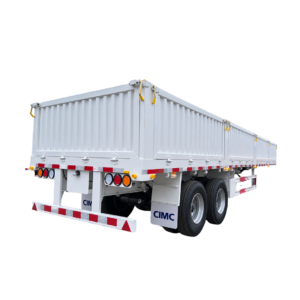
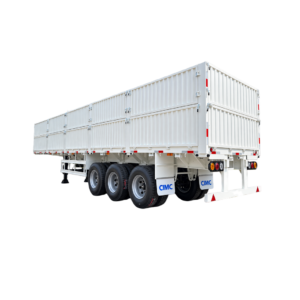
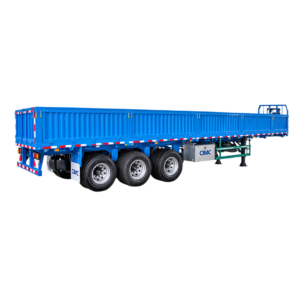
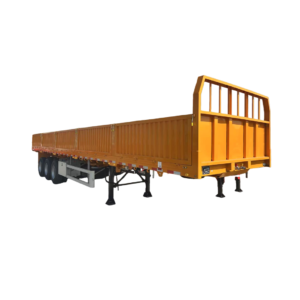
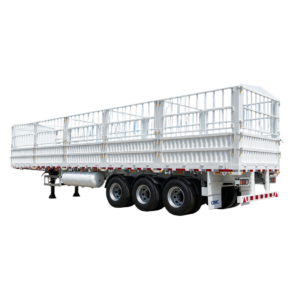
Fence Semi Trailer

Fence semi trailers are designed for transporting various types of cargo with enhanced loading flexibility. They are widely used in agriculture, logistics, construction materials, and general freight transportation. Featuring strong side panels, durable structures, and large loading capacity, these trailers provide safe, efficient, and reliable solutions for medium and long-distance cargo delivery.

Flexible Cargo Loading

Designed with fence side panels for convenient loading and transportation of various goods.

Strong Structural Design

Reinforced frame and durable materials ensure stable performance under heavy loads.

Large Capacity Transport

Provides spacious loading space for agricultural products, materials, and general cargo.

Reliable & Durable

Built for long-distance transportation with excellent strength and service life.

Fence Semi Trailer

Common Applications

Agricultural Transport
Logistics Distribution
Construction Materials
General Cargo Transport
Industrial Goods Transport

Fence Semi Trailer Products (4)

Showing all 4 results

CIMC 3 Axle Side Dump Semi Trailer
Fence Semi Trailer

CIMC 3 Axle Side Dump Semi Trailer

This semi-trailer is designed for efficient transport and unloading of bulk materials such as gravel, sand, and agricultural products. The side dumping mechanism allows…
Read more
Sidewall Semi-trailer
Fence Semi Trailer

CIMC 3 Axle Sidewall Semi-trailer

This semi-trailer is equipped with side walls to provide additional security and protection for transported cargo. Ideal for carrying bulk goods, pallets, and loose…
Read more

Fence Semi Trailer Specifications

Specification Details
Product Type Fence Semi Trailer / Sidewall Semi Trailer / Drop Side Semi Trailer
Axles 2 Axles /2 Axles /4 Axles, Customizable
Payload Capacity 40–60 Tons, Customizable
Trailer Length 40ft / 45ft / Customized
Side Wall Type Fixed Side Wall / Drop Side / Detachable Side Wall
Side Wall Height 600–1800 mm, Customizable
Axle Capacity 13 Tons / Axle, Customizable
Axle Brand FUWA / BPW / Other Brands Optional
Suspension Mechanical Spring Suspension / Air Suspension Optional
Tire 11R22.5 / 12R22.5, Depending on Configuration
Kingpin 2" JOST / 3.5" Optional
Landing Gear Heavy-duty Landing Gear, Approx. 28T
Brake System Dual-line Pneumatic Braking System
ABS Optional According to Market Requirements
Main Beam High-strength Steel Construction
Platform / Floor High-strength Steel / Checker Plate, Depending on Configuration
Side Wall Material High-strength Steel
Application Agricultural Products, Bagged Goods, Building Materials, Steel, Timber and General Cargo
Painting Color Customizable

Types of Fence Semi Trailers

Type Features / Applications
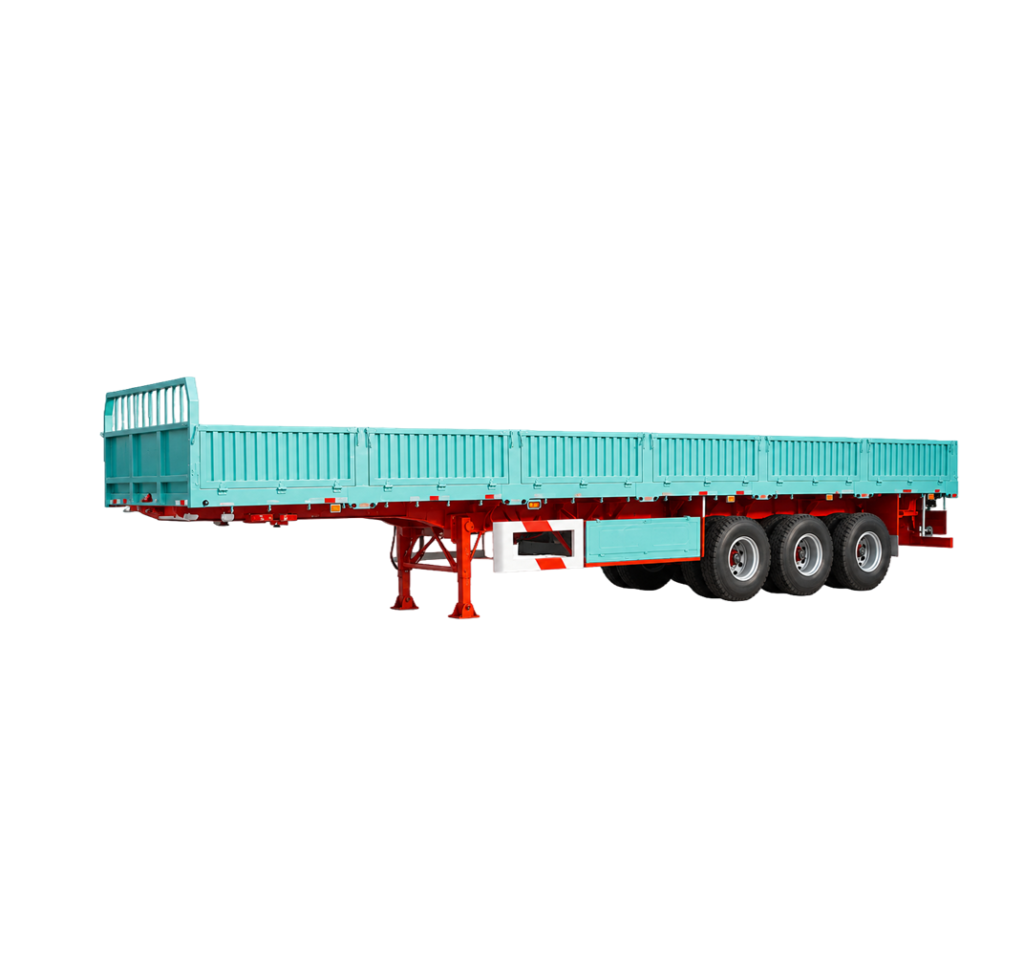
Sidewall Semi Trailer Equipped with fixed side walls to prevent cargo from falling during transport. Suitable for building materials, steel, bagged goods, and general cargo.
Drop Side Semi Trailer Features side panels that can be opened or lowered for easier loading and unloading. Commonly used for palletized goods, machinery, steel, and construction materials.
Fence Cargo Semi Trailer Designed with high fence panels for transporting agricultural products, livestock feed, packaged goods, and other bulk cargo.
Detachable Sidewall Semi Trailer Uses removable side panels, allowing the trailer to carry different types of cargo depending on transport requirements.
High-Side Fence Semi Trailer Built with higher side walls to increase cargo volume. Suitable for lightweight bulk materials, agricultural products, and bagged cargo.
Side Tipper Fence Semi Trailer Combines fence or sidewall structure with a side tipping system for faster unloading of suitable bulk materials.

How to Choose the Right Fence Semi Trailer?

Selecting a suitable fence semi trailer mainly comes down to what you plan to transport, how heavy the load is, and the conditions you operate in. A well-matched trailer helps improve efficiency, reduce wear and tear, and keep transport costs under control.

1. Start with Your Cargo Type

Different goods require different trailer setups. Fence semi trailers are commonly used for:

  • Farm and agricultural products
  • Bagged or bulk goods
  • Construction materials
  • General freight
  • Palletized cargo
  • Livestock and similar loads

If you often carry light but bulky goods, a higher fence structure gives you more usable space. For heavier cargo, the focus should be on chassis strength and axle capacity rather than fence height.

2. Match the Payload Requirement

Load capacity is a key factor when choosing a trailer.

Most fence semi trailers fall in the 30–60 ton range, depending on structure, axle setup, and suspension type.

Instead of relying only on the maximum rating, it’s better to choose a model that matches your real working conditions, especially if you handle heavy-duty transport on a regular basis.

3. Pick the Right Axle Setup

The most common option in the market is the 3-axle configuration, which offers a good balance between capacity and stability.

When deciding, consider:

  • Actual payload needs
  • Road conditions
  • Legal axle load limits
  • Tractor unit compatibility
  • Transport distance and frequency

For heavier or more specialized operations, additional axle configurations can be arranged.

4. Fence Height and Trailer Size

Fence height directly affects how much and what type of cargo you can carry.

  • Lower fences: better for dense, heavy goods
  • Higher fences: suitable for light, bulky cargo

Trailer dimensions such as length, width, and fence structure can usually be customized. Just make sure the final design meets local transport regulations before production.

5. Pay Attention to Build Quality

The durability of a fence semi trailer depends heavily on its structure. Key points to check include:

  • Main beam strength and material
  • Cross-member layout
  • Floor plate thickness
  • Welding quality
  • Fence durability
  • Anti-corrosion treatment

Using high-strength steel helps balance durability and overall weight.

6. Suspension Choice

Two main suspension types are widely used:

Mechanical suspension
Simple, strong, and cost-effective. It performs well on rough roads and is easy to maintain.

Air suspension
Offers smoother operation and better cargo protection, often used for higher-value goods or stricter road requirements.

7. Loading and Unloading Efficiency

If your operation involves frequent loading, fence design becomes important. Look for:

  • Foldable or removable side panels
  • Multiple access points
  • Simple locking systems
  • Easy side loading options

A practical design can save a lot of time in daily operations.

8. Make Sure It Meets Local Rules

Every market has its own transport regulations. Before ordering, confirm requirements such as:

  • Vehicle dimensions
  • Total weight limits
  • Axle load standards
  • Lighting and safety systems
  • Braking requirements
  • Tire specifications

For export use, it’s best to work with a supplier that can adjust the trailer according to destination standards.

There is no universal configuration that fits every job. A 3-axle fence semi trailer works well for most general transport needs, while heavier or more complex operations may require a reinforced or customized solution.

Before making a decision, clearly define your cargo type, load requirements, road conditions, and destination market. With this information, it becomes much easier to choose a fence semi trailer that fits your actual working needs.

Why Choose CIMC Fence Semi Trailers?

When selecting a fence semi trailer, the price is only one part of the decision. What really matters is long-term performance—build quality, structural strength, customization options, production experience, and after-sales support all play a role in daily operation.

CIMC brings together large-scale manufacturing capability and years of semi-trailer production experience. Its Fence Semi Trailers are widely used for transporting general cargo, agricultural products, construction materials, bagged goods, and other freight types.

Strong Manufacturing Capability

CIMC Vehicles Sales Co., Ltd. was established in 2011 and is located in Yangzhou, China. The company integrates design, R&D, production, and sales into one system.

The factory covers about 590,000 square meters, including more than 160,000 square meters of workshops, with around 2,450 employees.

With this production scale, every stage—from steel cutting and welding to assembly and final inspection—is managed under a standardized manufacturing process.

Advanced Semi-Trailer Production Lines

CIMC operates modern production lines and intelligent manufacturing systems for different types of semi-trailers.

Its product range includes nine major series and over 300 specifications, such as:

  • Fence semi trailers
  • Flatbed semi trailers
  • Lowbed semi trailers
  • Dump semi trailers
  • Container chassis
  • Box semi trailers
  • Tanker trailers
  • Vehicle transporters
  • Other special-purpose trailers

This wide product experience supports the development of Fence Semi Trailers suitable for different markets and working conditions.

Reliable Structure for Daily Transport

Fence semi trailers are often used for frequent loading, long-distance transport, and varied road conditions. Structural reliability is therefore essential.

CIMC Fence Semi Trailers can be configured with different combinations of:

  • Main beams and cross members
  • Side fence structures
  • Axles and suspension systems
  • Tires and braking systems

The design is not only about higher payload, but about balancing:

  • Structural strength
  • Trailer weight
  • Loading capacity
  • Driving stability
  • Service life
  • Maintenance cost

This balance makes the trailer more practical for everyday commercial use.

Flexible Customized Configurations

Transport conditions differ from country to country and customer to customer. Cargo type, payload requirements, road conditions, tractor specifications, and local regulations all influence trailer design.

CIMC Fence Semi Trailers can be customized in many aspects, including:

  • Number of axles
  • Trailer dimensions (length and width)
  • Fence height
  • Side wall design
  • Mechanical or air suspension
  • Tire specifications
  • Landing gear
  • Braking system
  • Toolboxes and accessories

For export markets, configurations can also be adjusted to meet local operating standards and regulations.

Focus on Quality and Innovation

CIMC follows a manufacturing approach that emphasizes strict quality control and continuous improvement in design and production technology.

For customers, this means attention is given not only to the finished product, but also to the entire manufacturing process behind it.

The company focuses on quality, reliability, innovation, performance, and practical customer needs, which is especially important for fleet operators and long-term users.

Suitable for Different Transport Applications

CIMC Fence Semi Trailers are suitable for a wide range of cargo, including agricultural products, bagged materials, construction materials, palletized goods, and general freight.

Different fence heights and structural options can be selected based on cargo type. Higher fence bodies are suitable for light and bulky goods, while reinforced chassis and axle configurations are better for heavy-duty transport.

Why Choose a CIMC Fence Semi Trailer?

Choosing CIMC means working with a manufacturer that combines large-scale production, practical engineering experience, flexible customization, and consistent quality control.

Whether you need a standard 3-axle fence semi trailer or a customized solution for specific transport conditions, CIMC can provide configurations based on your actual requirements.

To get a suitable recommendation, simply share your cargo type, payload requirement, tractor model, road conditions, destination country, and preferred dimensions. The team can help match you with the right Fence Semi Trailer for your operation.

Fence Semi Trailer FAQs

1. What is a Fence Semi Trailer?

A Fence Semi Trailer is a semi-trailer equipped with side fences or removable side panels around the cargo platform. It is commonly used for transporting agricultural products, bagged goods, building materials, palletized cargo, and general freight.

2. What is the typical loading capacity of a Fence Semi Trailer?

The loading capacity usually depends on the trailer structure, axle configuration, suspension, and local road regulations. Common models are designed for approximately 30–60 tons, while customized heavy-duty configurations are also available.

3. What are the common axle configurations for Fence Semi Trailers?

The 3-axle Fence Semi Trailer is one of the most widely used configurations because it provides a good balance between payload capacity, stability, and operating cost. Other axle configurations can be customized according to specific transport requirements.

4. Can the fence height and trailer dimensions be customized?

Yes. Trailer length, width, fence height, fence section design, and other structural details can be customized according to cargo type and transportation needs. The final dimensions should also comply with local vehicle regulations.

5. What suspension options are available?

Fence Semi Trailers can generally be equipped with mechanical suspension or air suspension. Mechanical suspension is durable and suitable for demanding road conditions, while air suspension provides smoother operation and better cargo protection.

6. What materials are used to manufacture Fence Semi Trailers?

High-strength steel is commonly used for the main beams, cross members, chassis, and fence structure. The exact steel grade and thickness depend on the required payload, operating conditions, and trailer design.

7. What cargo can a Fence Semi Trailer transport?

Fence Semi Trailers are suitable for a wide range of goods, including:

  • Agricultural products
  • Bagged materials
  • Construction materials
  • Palletized goods
  • General cargo
  • Light and bulky freight

Different fence heights and body structures can be selected according to the cargo.

8. What information should I provide when ordering a Fence Semi Trailer?

To recommend a suitable configuration, it is helpful to provide your cargo type, required payload, tractor model, road conditions, destination country, preferred trailer dimensions, axle requirements, and suspension preference. This information allows the manufacturer to configure the trailer according to your actual operating needs.

Scroll to Top