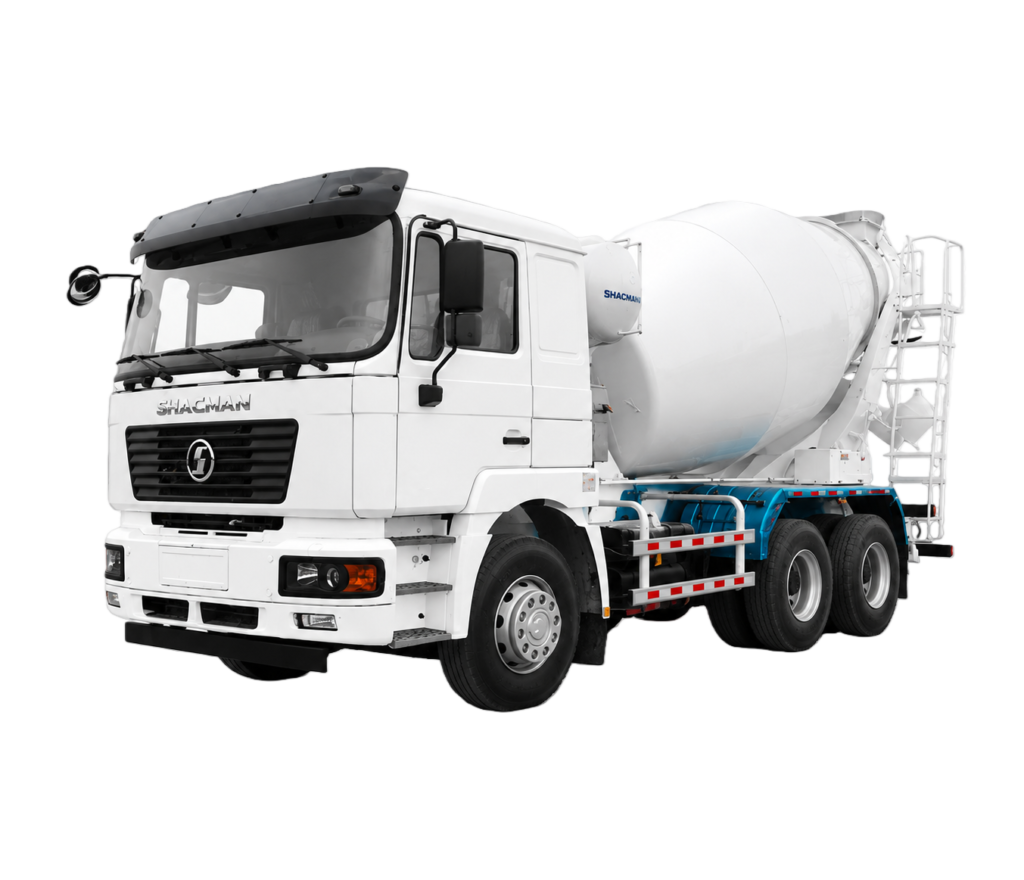
Choosing the right Mixer Truck (Concrete Mixer Truck) is important for improving concrete transportation efficiency and ensuring stable concrete quality during delivery. Different construction projects require different configurations, so customers should consider factors such as mixer capacity, chassis type, transportation distance, road conditions, and working environment before making a decision.
Choose the Right Mixer Capacity
The mixer drum capacity determines how much concrete can be transported in one trip. The suitable capacity depends on the size of the project and daily concrete demand.
Small Capacity Mixer Truck (2-6CBM)
Small mixer trucks are suitable for:
- Small construction projects
- Residential buildings
- Urban construction sites
- Areas with narrow roads
They offer better flexibility and are easier to operate in limited spaces.
Medium Capacity Mixer Truck (8-10CBM)
The 8-10CBM mixer truck is the most commonly used configuration in the market.
It is suitable for:
- Commercial concrete transportation
- Building construction
- Road construction projects
- General infrastructure projects
This configuration provides a good balance between transportation capacity, fuel consumption, and operating costs.
Large Capacity Mixer Truck (12CBM and Above)
Large capacity mixer trucks are mainly used for:
- Large infrastructure projects
- High-volume concrete supply
- Long-distance concrete transportation
They can transport more concrete per trip, reducing transportation frequency and improving construction efficiency.
Select the Suitable Drive Configuration
The chassis configuration directly affects the truck's load capacity, stability, and adaptability.
6×4 Mixer Truck
The 6×4 Mixer Truck is widely used for general construction applications.
Suitable for:
- Urban construction
- Concrete plant delivery
- Medium-distance transportation
Advantages:
- Strong adaptability
- Good fuel efficiency
- Reliable performance under normal working conditions
It is a practical choice for most construction projects.
8×4 Mixer Truck
The 8×4 Mixer Truck is designed for projects requiring higher transportation capacity.
Suitable for:
- Large construction sites
- High-rise buildings
- Infrastructure projects
Advantages:
- Higher loading capacity
- Stronger chassis structure
- Better performance under heavy loads
Consider the Working Environment
The operating environment plays an important role in choosing the right mixer truck.
Urban Construction
For city construction projects, a 4×2 or 6×4 Mixer Truck is usually more suitable because it provides better flexibility and easier operation on narrow roads.
Highway and Infrastructure Projects
For long-distance transportation and large projects, a 6×4 or 8×4 Mixer Truck can provide better stability and higher transportation efficiency.
Mining and Difficult Road Conditions
For harsh environments, a heavy-duty mixer truck with a stronger chassis and suspension system is recommended to improve durability and reliability.
Check Chassis and Vehicle Performance
The chassis is the foundation of a mixer truck and directly affects its service life and operating performance.
When selecting a Mixer Truck, customers should pay attention to:
- Engine power
- Transmission system
- Suspension performance
- Brake system
- Spare parts availability
Popular export models include:
- Shacman F2000 Mixer Truck
- Shacman F3000 Mixer Truck
- Shacman X3000 Mixer Truck
- SINOTRUK HOWO Mixer Truck
These models are widely used in construction, road projects, and infrastructure development.
Pay Attention to Mixer Drum Quality
The mixer drum is one of the key components of a concrete mixer truck.
Important factors include:
- Steel quality
- Corrosion resistance
- Mixing efficiency
- Hydraulic system reliability
- Maintenance requirements
A well-designed mixing system helps keep concrete evenly mixed during transportation and prevents material separation.
Consider Long-Term Operating Costs
In addition to the purchase price, customers should consider the long-term operating cost of the vehicle.
Important factors include:
- Fuel consumption
- Maintenance requirements
- Spare parts supply
- Vehicle durability
- After-sales service
Choosing a reliable brand and suitable configuration can reduce downtime and improve overall operating efficiency.