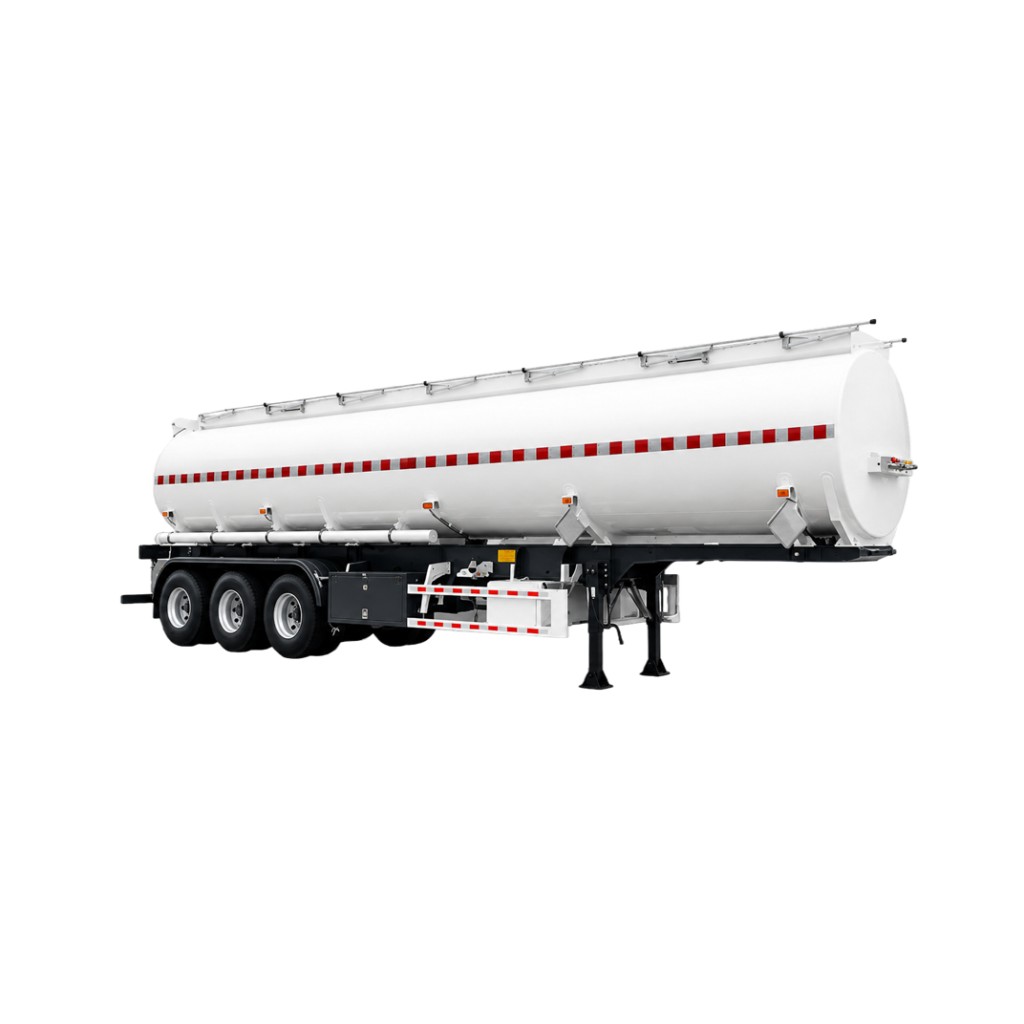
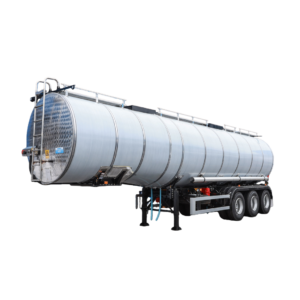
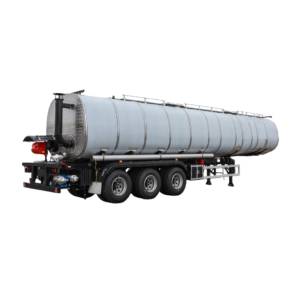
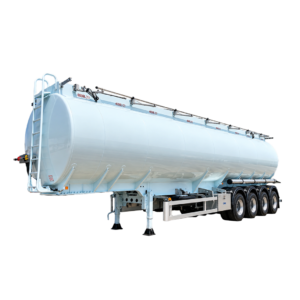
Selecting the right Fuel Tanker Semi Trailer is important for improving transportation efficiency, ensuring cargo safety, and reducing operating costs. The suitable trailer configuration depends on the type of liquid cargo, loading capacity, material requirements, and local transportation conditions.
1. Select the Trailer According to Cargo Type
Different liquid materials have different requirements for tank structure and material.
For transporting diesel, gasoline, and fuel oil, a standard Fuel Tanker Semi Trailer is commonly used. These trailers are designed for petroleum product transportation and can be configured with different compartment layouts according to customer requirements.
For chemical liquid transportation, a Chemical Liquid Tank Semi Trailer is required. Stainless steel tanks or specially treated tanks are usually selected to provide better corrosion resistance and longer service life.
For asphalt and bitumen transportation, an Asphalt Tank Semi Trailer or Bitumen Tank Semi Trailer with insulation and heating systems is recommended to maintain the required cargo temperature during transportation.
For food-grade liquids, such as milk and edible oil, a stainless steel tank with hygienic design is the preferred solution.
2. Choose the Right Tank Capacity
The tank capacity should be selected based on transportation demand, loading frequency, and local regulations.
Common Fuel Tanker Semi Trailer capacities include:
- 30,000L-40,000L: Suitable for medium-distance transportation and smaller distribution operations.
- 40,000L-50,000L: A common choice for fuel logistics with a good balance between capacity and operating cost.
- 50,000L-60,000L: Suitable for large-scale fuel transportation and high-volume distribution.
Customers should also consider maximum allowable vehicle weight and road regulations in the destination market.
3. Select the Suitable Axle Configuration
The axle configuration directly affects loading capacity, stability, and transportation performance.
2 Axle Fuel Tanker Semi Trailer
Suitable for medium-load transportation. It offers lower investment costs and flexible operation.
3 Axle Fuel Tanker Semi Trailer
The most popular configuration for fuel transportation. It provides a good balance between payload capacity, stability, and maintenance cost.
4 Axle Fuel Tanker Semi Trailer
Designed for heavy-duty transportation with higher loading capacity and stronger performance for long-distance operations.
4. Choose the Proper Tank Material
The tank material should be selected according to the characteristics of the transported liquid.
Carbon Steel Tank
- Strong and durable structure
- Cost-effective solution
- Widely used for fuel, diesel, and asphalt transportation
Stainless Steel Tank
- Excellent corrosion resistance
- Easy to clean and maintain
- Suitable for chemical liquids and food-grade transportation
Aluminum Alloy Tank
- Lightweight design
- Higher payload efficiency
- Suitable for fuel transportation where weight reduction is important
5. Consider the Tank Structure and Compartments
The tank structure affects transportation flexibility.
A Single Compartment Fuel Tanker Semi Trailer is suitable for transporting one type of liquid cargo.
A Multi Compartment Fuel Tanker Semi Trailer allows different fuel products to be transported separately in one trailer, improving transportation efficiency and flexibility.
For asphalt and bitumen transportation, insulated tanks and heating systems help maintain cargo temperature and ensure smooth unloading.
6. Consider Operating Conditions and Regulations
Before purchasing a Fuel Tanker Semi Trailer, customers should evaluate:
- Transportation distance
- Road conditions
- Local weight limits
- Loading and unloading requirements
- Safety standards
- Maintenance convenience
The trailer configuration should match the operating environment to achieve safe and efficient transportation.
7. Recommended Choice
For general fuel transportation, a 3 Axle Fuel Tanker Semi Trailer with 40,000L-50,000L capacity is widely used because it offers a good balance of loading capacity, stability, and operating cost.
For specific applications such as chemical liquids, asphalt, bitumen, or multi-product fuel transportation, customers should choose specialized tanker designs to meet cargo requirements.