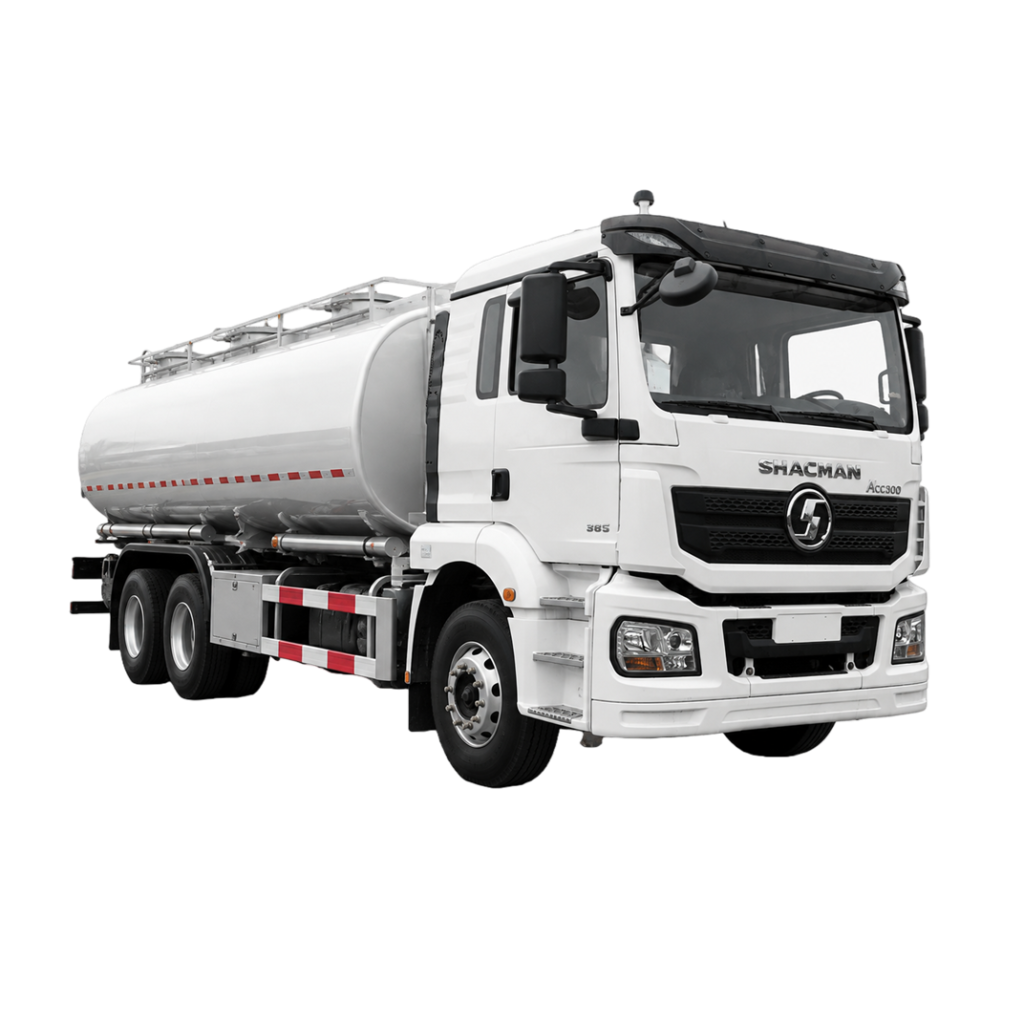
Selecting the right Fuel Tanker Truck is not only about choosing the tank capacity. The vehicle configuration should match the type of fuel, transportation distance, road conditions, and daily operating requirements. A properly selected fuel tanker can improve delivery efficiency, reduce operating costs, and ensure safer transportation.
1. Select the Tank Capacity According to Transportation Demand
Tank capacity is one of the first factors to consider when purchasing a fuel tanker truck.
Small Capacity Fuel Tank Truck (5,000L-10,000L)
Suitable for urban fuel distribution, small gas stations, and short-distance delivery. These models are easier to operate in crowded areas and have better flexibility.
Medium Capacity Fuel Tank Truck (12,000L-20,000L)
This is the most commonly used range for fuel transportation. It is suitable for gas station supply, regional fuel distribution, and industrial fuel delivery. Models such as 12,000L 4×2 Fuel Tank Truck and 20,000L 6×4 Fuel Tank Truck are widely used in many markets.
Large Capacity Fuel Tank Truck (25,000L and Above)
Designed for large-scale fuel logistics and long-distance transportation. These trucks can reduce transportation frequency and improve delivery efficiency.
2. Choose the Correct Chassis Configuration
The chassis directly affects the truck's load capacity, stability, and operating cost.
4×2 Fuel Tank Truck
A 4×2 configuration is suitable for urban transportation and short-distance fuel delivery. It provides good maneuverability, lower fuel consumption, and easier maintenance, making it a practical choice for daily distribution.
6×4 Fuel Tank Truck
A 6×4 fuel tanker is commonly selected for medium and long-distance transportation. It provides stronger traction, better stability, and higher loading capacity, making it suitable for regional fuel logistics.
8×4 Fuel Tank Truck
An 8×4 model is designed for heavy-duty fuel transportation. It is suitable for large fuel supply projects, industrial applications, and areas requiring higher transportation volume.
3. Select the Proper Tank Material
The tank material affects vehicle weight, durability, and transportation efficiency.
Aluminum Fuel Tank Truck
Aluminum tanks are lightweight and help increase payload capacity. They also provide good corrosion resistance and are commonly used for long-distance fuel transportation where efficiency is important.
Carbon Steel Fuel Tank Truck
Carbon steel tanks offer high strength and good durability at a reasonable cost. They are widely used for transporting diesel, gasoline, and other petroleum products.
Stainless Steel Fuel Tank Truck
Stainless steel tanks provide better corrosion resistance and are suitable for special fuel products or applications requiring higher material performance.
4. Consider Fuel Type and Tank Structure
Different fuel products may require different tank designs.
For normal diesel and gasoline transportation, a standard fuel tank truck can meet most requirements.
For customers transporting multiple fuel products, a multi-compartment fuel tanker truck is a better choice. Separate compartments allow different fuels to be transported in one vehicle, improving transportation flexibility.
The tank design should also include safety features such as anti-static systems, emergency shut-off valves, and reliable sealing structures.
5. Match the Truck to the Working Environment
The operating environment plays an important role in vehicle selection.
For urban fuel delivery, a 4×2 fuel tanker truck is usually more suitable because of its flexibility.
For highway and regional transportation, a 6×4 model provides better stability and efficiency.
For mining areas, oil fields, and remote regions, a heavy-duty 6×4 or 8×4 fuel tanker truck is recommended due to stronger chassis performance and better adaptability.
6. Pay Attention to Chassis Reliability
Fuel transportation requires stable and reliable vehicle performance. When choosing a Fuel Tanker Truck, customers should consider:
- Engine power and fuel efficiency
- Transmission performance
- Brake system
- Suspension durability
- Spare parts availability