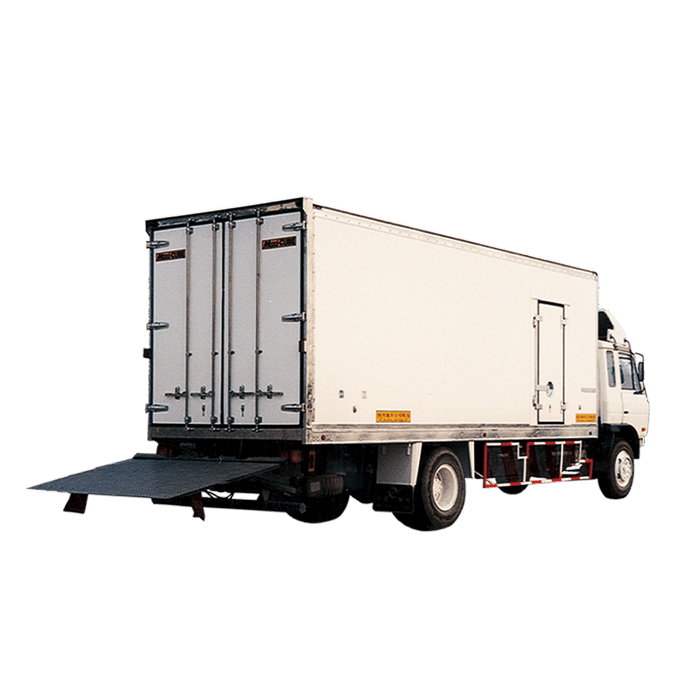
Choosing the right van truck depends on the cargo, payload, loading method, travel distance, and operating conditions. Since each configuration serves a different logistics need, buyers should consider both cargo protection and operating efficiency.
1. Choose According to Cargo Type
The type of goods is the first factor to consider.
For packaged goods, furniture, electronics, and daily necessities, a Dry Van Truck or Box Truck is usually suitable. Its enclosed cargo body protects goods from rain, dust, and road conditions.
For frozen food, fresh produce, meat, seafood, dairy products, and other temperature-sensitive goods, a Refrigerated Van Truck is a better choice. Its insulated body and refrigeration system help maintain the required temperature.
For frequent side loading and unloading, a Wingspan Van Truck or Curtain Side Van Truck can improve efficiency.
2. Determine the Required Payload Capacity
Payload should be based on the actual cargo weight. A larger cargo body does not necessarily provide a higher payload, as capacity also depends on the chassis, axles, suspension, tires, and local regulations.
For light but bulky goods, cargo volume is more important. For heavy cargo, chassis strength and axle capacity should receive greater attention.
Before ordering, provide the expected cargo weight and operating conditions to ensure the vehicle is properly configured.
3. Select the Appropriate Cargo Body Size
Van truck dimensions should match the size and volume of the cargo.
Key dimensions include:
- Cargo body length
- Cargo body width
- Cargo body height
- Overall vehicle dimensions
- Cargo volume
A compact body offers better maneuverability for urban distribution, while a longer or higher body is more suitable for long-distance or high-volume transportation.
Cargo body dimensions can also be customized for different chassis and markets.
4. Consider the Loading and Unloading Method
The loading method directly affects van truck selection.
A standard Box Truck usually has rear doors and suits conventional warehouse loading.
A Side Opening Van Truck provides additional side access for frequent deliveries.
A Wingspan Van Truck has large upward-opening side panels, allowing forklifts to load from either side. It is commonly used for palletized goods, automotive parts, industrial products, and factory logistics.
A Curtain Side Van Truck uses sliding curtains instead of rigid side panels, making it easier to load palletized or oversized cargo.
5. Check Temperature Control Requirements
Temperature-sensitive goods require specialized configurations.
For refrigerated transportation, consider:
- Required operating temperature
- Refrigeration unit capacity
- Insulation material and thickness
- Door sealing performance
- Transportation distance
- Ambient temperature
A refrigerated van truck can be configured for chilled or frozen goods. If active refrigeration is unnecessary but temperature stability matters, an Insulated Van Truck may be a more economical option.
6. Choose the Right Body Material
Van truck bodies are available in several materials.
Steel bodies offer high strength and suit general transportation.
Aluminum alloy bodies are lightweight and corrosion-resistant, helping reduce tare weight and improve payload efficiency.
Composite panel bodies provide insulation, corrosion resistance, and low weight. They are often used for refrigerated, insulated, and general logistics vehicles.
The best material depends on payload, operating conditions, budget, and cargo type.
7. Consider Chassis and Road Conditions
The chassis should match the payload, travel distance, road conditions, and local regulations.
Depending on vehicle size and carrying requirements, common configurations include 4×2, 6×2, and 6×4.
For highway use, fuel economy and stability are important. Rough roads and heavy-duty applications may require a stronger chassis, suspension, and axle system.
Also consider the braking system, tires, suspension type, and local maintenance support.