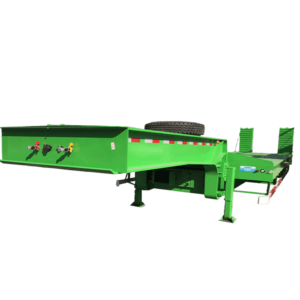
A Lowbed Semi Trailer is widely used for transporting heavy machinery, construction equipment, and oversized loads. However, choosing the right trailer is not simply about selecting the largest capacity model. The trailer design, axle configuration, loading method, and road conditions all affect transportation safety and operating efficiency.
Before purchasing a lowbed semi trailer, it is important to evaluate your actual transportation requirements.
1. Consider the Weight and Type of Cargo
The cargo type and weight are the most important factors when selecting a lowbed trailer.
Lowbed semi trailers are commonly used for transporting:
- Excavators
- Bulldozers
- Wheel loaders
- Mining equipment
- Construction machinery
- Heavy industrial equipment
Different equipment requires different trailer capacities. For example, a 40-ton lowbed trailer is suitable for medium-sized construction machinery, while heavier equipment may require a 60-ton or 70-ton heavy duty lowbed trailer.
Choosing a trailer with insufficient capacity may affect safety and service life, while an oversized trailer can increase purchase and operating costs.
2. Select the Correct Number of Axles
The axle configuration determines the trailer's load capacity and weight distribution.
2 Axle Lowbed Semi Trailer
A 2 axle lowbed trailer is suitable for relatively light heavy equipment transportation.
Main advantages:
- Lower purchase cost
- Easier maintenance
- Good maneuverability
It is commonly used for equipment around 40 tons.
3 Axle Lowbed Semi Trailer
The 3 axle lowbed trailer is one of the most common configurations in international transportation.
It provides a good balance between:
- Load capacity
- Stability
- Operating flexibility
It is suitable for transporting excavators, loaders, and other construction equipment in the 40–70 ton range.
4 Axle and Multi Axle Lowbed Trailer
For extremely heavy or oversized equipment, multi axle lowbed trailers are recommended.
Benefits include:
- Better load distribution
- Lower axle pressure
- Higher transportation stability
They are commonly used for mining machinery, large engineering equipment, and special transportation projects.
3. Choose the Suitable Gooseneck Design
The gooseneck structure affects loading efficiency and trailer performance.
Hydraulic Gooseneck Lowbed Trailer
A hydraulic gooseneck allows the front section of the trailer to be adjusted through a hydraulic system.
Advantages:
- Easier equipment loading
- Lower loading height
- Improved operation efficiency
This type is widely used for excavators and large construction machinery.
Fixed Gooseneck Lowbed Trailer
A fixed gooseneck design provides a strong and durable structure.
Advantages:
- Simple design
- Reliable performance
- Lower maintenance requirements
It is suitable for regular heavy equipment transportation.
Detachable Gooseneck Lowbed Trailer
A detachable gooseneck trailer allows the front section to be removed, enabling equipment to drive directly onto the trailer.
It is commonly used for:
- Large excavators
- Mining equipment
- Oversized machinery
4. Check the Trailer Size and Platform Dimensions
The trailer dimensions should match the size of the equipment being transported.
Important specifications include:
- Platform length
- Platform width
- Loading height
- Overall trailer dimensions
Common lowbed trailer lengths include:
For special cargo, manufacturers can provide customized designs.
5. Select the Right Loading System
Different types of equipment require different loading solutions.
Rear Ramp Loading
Suitable for most construction machinery, including excavators and loaders.
Advantages:
- Simple structure
- Easy operation
- Low maintenance cost
Hydraulic Loading System
Suitable for companies that frequently load and unload heavy equipment.
Advantages:
- Faster operation
- Reduced manual work
- Improved safety
Detachable Gooseneck Loading
Provides front-loading capability and is suitable for oversized machinery.
6. Consider Road Conditions and Local Regulations
The working environment should also be considered before choosing a lowbed semi trailer.
Important factors include:
- Maximum legal axle load
- Road conditions
- Transportation distance
- Terrain
- Local regulations
For highway transportation, a standard 3 axle lowbed trailer may be sufficient.
For mining areas or heavy-duty applications, a reinforced multi axle trailer may be a better choice.
7. Choose a Reliable Lowbed Semi Trailer Manufacturer
The quality of the trailer directly affects transportation safety and operating costs.
When selecting a manufacturer, pay attention to:
Frame Quality
A strong frame structure ensures better durability under heavy loads.
Axle and Suspension System
Reliable axle and suspension components improve stability and reduce maintenance frequency.
Customization Capability
A professional lowbed trailer manufacturer should be able to provide:
- Different axle configurations
- Customized platform sizes
- Hydraulic systems
- Special transportation solutions
Lowbed Semi Trailer Selection Guide
| Application |
Recommended Trailer |
| 40 ton construction equipment |
2 or 3 axle lowbed trailer |
| 60 ton heavy machinery |
3 axle heavy duty lowbed trailer |
| 70 ton+ equipment |
Multi axle lowbed trailer |
| Excavator transportation |
Hydraulic gooseneck lowbed trailer |
| Oversized machinery |
Detachable gooseneck trailer |
| Long cargo transportation |
Extendable lowbed trailer |
Selecting the right Lowbed Semi Trailer requires a clear understanding of cargo weight, equipment size, transportation conditions, and local regulations.
A properly designed lowbed trailer can improve transportation efficiency, reduce maintenance costs, and provide safer operation for heavy equipment transportation.
Working with an experienced Lowbed Semi Trailer manufacturer allows you to choose the most suitable trailer configuration, including axle options, loading systems, and customized dimensions



-300x300.png)