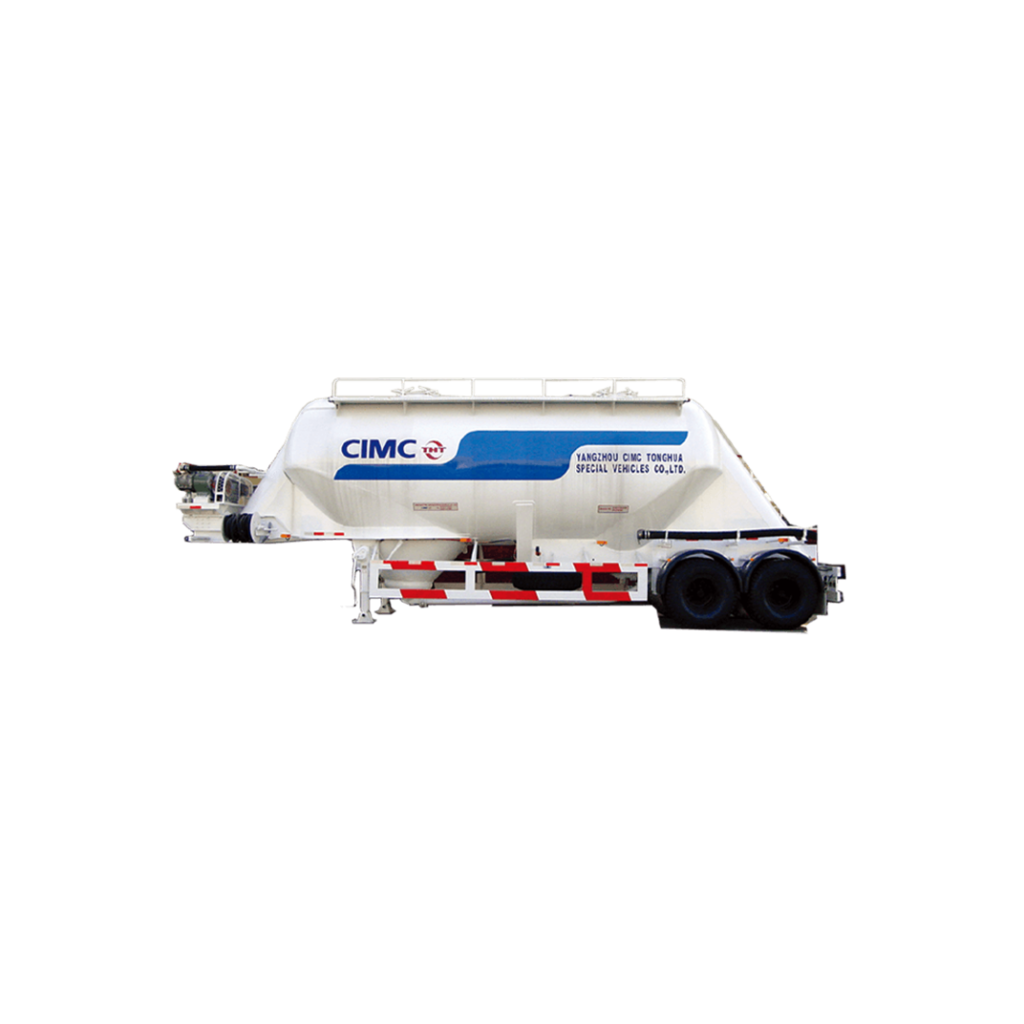
1. What is a Power Tank Semi Trailer?
A Power Tank Semi Trailer is a dry bulk transportation trailer designed for carrying powder materials such as cement, fly ash, mineral powder, flour, and other dry bulk products. It uses a pneumatic discharge system to unload materials efficiently into storage silos or processing equipment.
2. What materials can a Power Tank Semi Trailer transport?
Power Tank Semi Trailers are commonly used for transporting:
- Cement powder
- Fly ash
- Mineral powder
- Limestone powder
- Dry mortar
- Flour
- Starch
- Chemical powder
- Other dry bulk materials
Different materials may require different tank materials and discharge system configurations.
3. What is the capacity of a Power Tank Semi Trailer?
The standard capacity range is usually 25–60 CBM.
Common configurations include:
- 25–35 CBM for short-distance transportation
- 35–50 CBM for general bulk powder transportation
- 50–60 CBM for large-volume and long-distance transportation
Customized capacities are available according to customer requirements and local regulations.
4. How does a Power Tank Semi Trailer unload powder materials?
A Power Tank Semi Trailer uses a pneumatic discharge system.
During unloading:
- The air compressor generates compressed air.
- Air enters the tank through the pipeline system.
- Powder materials become fluidized and mixed with airflow.
- The material is transferred through the discharge pipe into the storage silo.
This system provides fast unloading and reduces material residue inside the tank.
5. What is the difference between a carbon steel and aluminum alloy powder tank trailer?
Carbon Steel Tank Trailer
Advantages:
- High strength
- Durable structure
- Lower purchase cost
Suitable for:
- Cement
- Fly ash
- Mineral powder transportation
Aluminum Alloy Tank Trailer
Advantages:
- Lightweight design
- Higher payload efficiency
- Better corrosion resistance
Suitable for:
- Long-distance transportation
- Markets with strict weight limitations
6. How many axles does a Power Tank Semi Trailer need?
The axle configuration depends on transportation requirements.
2 Axle Trailer
Suitable for:
- Light-duty applications
- Short-distance transportation
3 Axle Trailer
Suitable for:
- Cement and general powder transportation
- Most international markets
4 Axle Trailer
Suitable for:
- Heavy-duty transportation
- Large-volume logistics operations
7. What compressor is used on a Power Tank Semi Trailer?
Power Tank Semi Trailers are usually equipped with pneumatic unloading compressors.
Common options include:
- Diesel engine-driven compressor
- PTO-driven compressor
- External air supply system
The compressor selection depends on tank capacity, unloading speed requirements, and operating conditions.
8. How long does it take to unload a bulk powder tank trailer?
The unloading time depends on:
- Tank capacity
- Material characteristics
- Compressor performance
- Discharge distance
Generally, a standard Power Tank Semi Trailer can complete unloading within approximately 30–60 minutes under normal working conditions.
9. Can a Power Tank Semi Trailer be customized?
Yes. Manufacturers can customize the trailer according to customer requirements, including:
- Tank capacity
- Number of axles
- Tank material
- Compressor system
- Suspension type
- Discharge pipeline design
- Branding and color
10. What should I consider before buying a Power Tank Semi Trailer?
Before purchasing, customers should consider:
- Type of powder material
- Required loading capacity
- Transportation distance
- Local road regulations
- Axle configuration
- Tank material
- Unloading system requirements
Selecting the correct configuration helps improve transportation efficiency and reduce operating costs.
11. What is the service life of a Power Tank Semi Trailer?
The service life depends on:
- Tank material quality
- Operating conditions
- Maintenance frequency
- Transportation environment
With proper maintenance, a high-quality bulk powder tank trailer can provide reliable service for many years.