
Learn how to prevent rust on a flatbed trailer with practical maintenance tips, protective coatings, proper storage, and repair techniques to extend your trailer’s lifespan.
How to Prevent Rust on a Flatbed Trailer
A flatbed trailer is designed to handle demanding transportation tasks, from hauling heavy machinery and construction materials to agricultural equipment. However, regardless of how durable the trailer is, rust remains one of the biggest threats to its performance and service life.
Once corrosion begins, it can spread gradually beneath the surface, weakening the steel and increasing maintenance costs. Fortunately, most rust-related problems can be prevented through routine maintenance and proper care.
This guide explains the most effective ways to prevent rust on a flatbed trailer, helping you protect your investment and keep your trailer in reliable working condition for years to come.
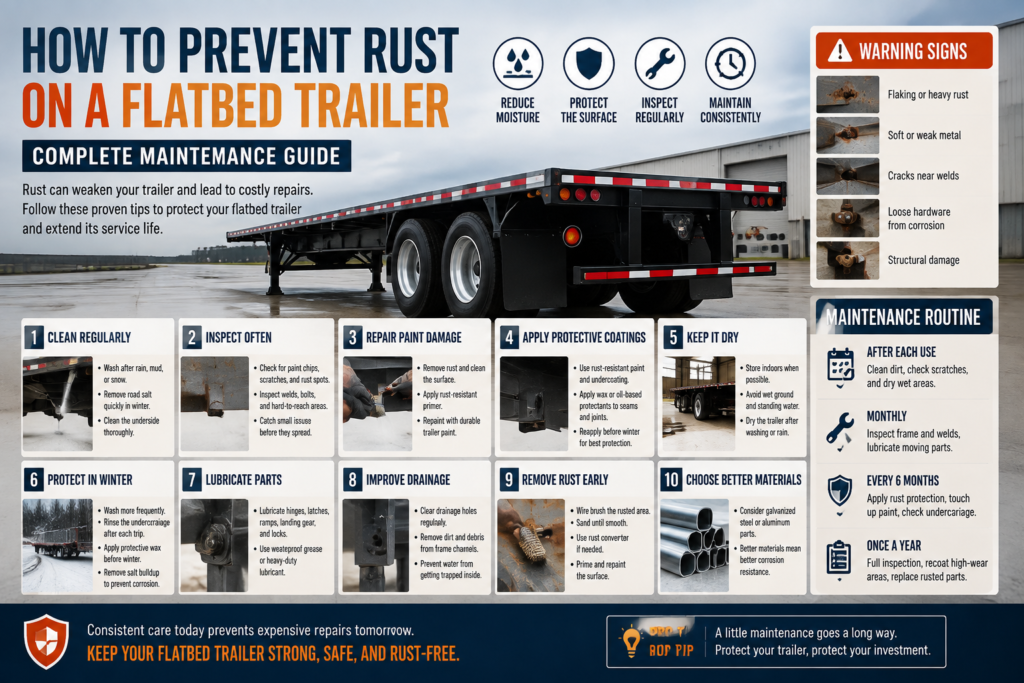
Why Do Flatbed Trailers Rust?
Rust develops when exposed steel comes into contact with moisture and oxygen over an extended period. Environmental factors such as road salt, mud, chemicals, and damaged paint can significantly accelerate the corrosion process.
The most common causes of rust include:
- Rain, snow, and high humidity
- Road salt during winter
- Mud and debris accumulating on the frame
- Scratches, chips, or worn paint
- Water trapped inside frame channels
- Lack of protective coatings
If left untreated, minor surface rust can eventually develop into severe structural corrosion that is far more costly to repair.
1. Clean Your Trailer Regularly
Routine cleaning is one of the simplest and most effective ways to prevent rust.
Mud, road salt, fertilizer, and other contaminants trap moisture against the steel surface, creating ideal conditions for corrosion.
Best Cleaning Practices
- Wash the trailer after driving through rain, mud, or snow.
- Remove road salt as soon as possible during winter.
- Thoroughly clean the undercarriage as well as the deck.
- Pay close attention to welds, cross members, and corners where debris tends to collect.
- Allow the trailer to dry completely before long-term storage.
Keeping the trailer clean removes corrosive materials before they can damage the steel.
2. Inspect the Trailer Frequently
Regular inspections help identify small problems before they become expensive repairs.
During each inspection, check for:
- Paint chips and scratches
- Exposed bare steel
- Bubbling or peeling paint
- Small orange rust spots
- Rust forming around welds, bolts, and fasteners
Addressing minor damage early can significantly extend the lifespan of your trailer.
3. Repair Paint Damage Immediately
Paint acts as the trailer’s first line of defense against moisture and corrosion. Once that protective layer is damaged, bare steel becomes vulnerable to rust.
Quick Repair Steps
- Remove loose rust using sandpaper or a wire brush.
- Clean the affected area thoroughly.
- Apply a rust-resistant primer.
- Repaint with a high-quality trailer paint.
- Allow the paint to cure completely before returning the trailer to service.
Even small paint repairs can prevent much larger corrosion problems later.
4. Apply Protective Coatings
Protective coatings create an additional barrier that shields the steel from moisture, salt, and harsh weather conditions.
Popular options include:
Rust-Resistant Paint
Provides long-lasting protection for exposed steel surfaces.
Undercarriage Coating
Protects the trailer frame from road debris, water, and salt.
Wax- or Oil-Based Rust Inhibitors
Ideal for protecting seams, joints, welds, and other hard-to-reach areas.
For the best results, inspect and refresh protective coatings periodically, especially before winter.
5. Keep the Trailer Dry
Since moisture is the primary cause of rust, reducing water exposure is essential.
To help keep your trailer dry:
- Store it indoors whenever possible.
- Avoid parking on wet grass or bare soil.
- Ensure water cannot pool beneath the trailer.
- Dry the trailer after washing or heavy rainfall.
- Maintain good airflow around the storage area.
Proper storage can significantly slow the corrosion process.
6. Take Extra Precautions During Winter
Winter driving exposes trailers to road salt, melting snow, and constant moisture—all of which accelerate corrosion.
To minimize winter damage:
- Wash the trailer more frequently.
- Rinse the undercarriage after every trip.
- Apply a protective wax or rust inhibitor before winter begins.
- Regularly inspect brake components, suspension parts, and the frame.
Removing salt buildup promptly is one of the most effective ways to prevent rust.
7. Lubricate Moving Components
Corrosion doesn’t only affect the trailer frame. Moving parts are equally susceptible to rust if they are not properly maintained.
Lubricate components such as:
- Hinges and latches
- Loading ramps
- Landing gear
- Locks and pins
- Winches and moving hardware
Using a waterproof grease or heavy-duty lubricant helps reduce wear while protecting metal components from moisture.
8. Ensure Proper Drainage
Standing water inside the trailer frame can cause hidden corrosion that may go unnoticed for years.
Regularly inspect for:
- Blocked drainage holes
- Dirt or debris inside frame channels
- Areas where water tends to collect
Keeping drainage paths clear helps prevent rust from developing inside the trailer structure.
9. Treat Rust as Soon as It Appears
If you notice rust, take action immediately before it spreads.
Basic Rust Repair
- Remove loose rust using a wire brush.
- Sand the surface until clean metal is exposed.
- Apply a rust converter if necessary.
- Prime the repaired area.
- Finish with a durable protective paint.
Early treatment is far less expensive than repairing severe corrosion later.
10. Choose Corrosion-Resistant Materials
If you’re purchasing a new flatbed trailer or replacing damaged components, choosing corrosion-resistant materials can reduce future maintenance.If you’re still comparing different trailer types and specifications, check out our guide on How to Choose a Flatbed Trailer before making your purchase.
Galvanized Steel
The zinc coating provides excellent long-term protection against rust.
Aluminum Components
Aluminum naturally resists corrosion, making it an excellent option for certain trailer parts.
Although these materials may cost more initially, they often lower long-term maintenance and repair expenses.
Warning Signs Your Trailer Needs Immediate Attention
Watch for these signs of serious corrosion:
- Heavy flaking rust
- Soft or weakened metal
- Cracks around welds
- Deep corrosion pits
- Loose hardware caused by rust
- Visible structural deformation
If corrosion affects structural components, stop using the trailer until it has been professionally inspected and repaired.
Recommended Trailer Maintenance Schedule
Following a simple maintenance routine can greatly reduce the risk of rust.
After Every Trip
- Remove mud, dirt, and debris.
- Check for scratches or paint damage.
- Dry any wet surfaces.
Monthly
- Inspect the frame, welds, and hardware.
- Lubricate all moving components.
Every Six Months
- Reapply rust protection where needed.
- Touch up damaged paint.
- Inspect the undercarriage thoroughly.
Annually
- Perform a complete corrosion inspection.
- Recoat high-wear areas.
- Replace severely rusted hardware or components.
Consistent preventive maintenance is always more cost-effective than repairing advanced corrosion.
Frequently Asked Questions
Can rust be completely prevented?
While rust cannot be eliminated entirely, regular cleaning, protective coatings, and proper storage can greatly slow the corrosion process.
Is surface rust a serious problem?
Surface rust is usually minor at first, but if ignored, it can spread and eventually compromise the trailer’s structural integrity.
What is the best coating for a flatbed trailer?
A combination of epoxy primer and high-quality polyurethane or trailer paint offers excellent long-term corrosion protection.
Is pressure washing recommended?
Yes. Pressure washing is highly effective for removing mud, salt, and debris, particularly from the undercarriage. However, avoid spraying directly into bearings or electrical components.
Rust is inevitable, but serious corrosion doesn’t have to be. By following a consistent maintenance routine—including regular cleaning, timely paint repairs, protective coatings, proper storage, and routine inspections—you can significantly extend the lifespan of your flatbed trailer.
A small investment in preventive maintenance today can save you substantial repair costs tomorrow while keeping your trailer safe, reliable, and ready for every job.