
Selecting the right Car Carrier Truck is essential for any business that transports vehicles. Whether you operate a car dealership, logistics company, or fleet service, the right Car Transporter can improve efficiency, reduce damage, and ensure compliance with regulations. This guide explains how to choose a vehicle carrier that fits your business needs while highlighting key features to consider.
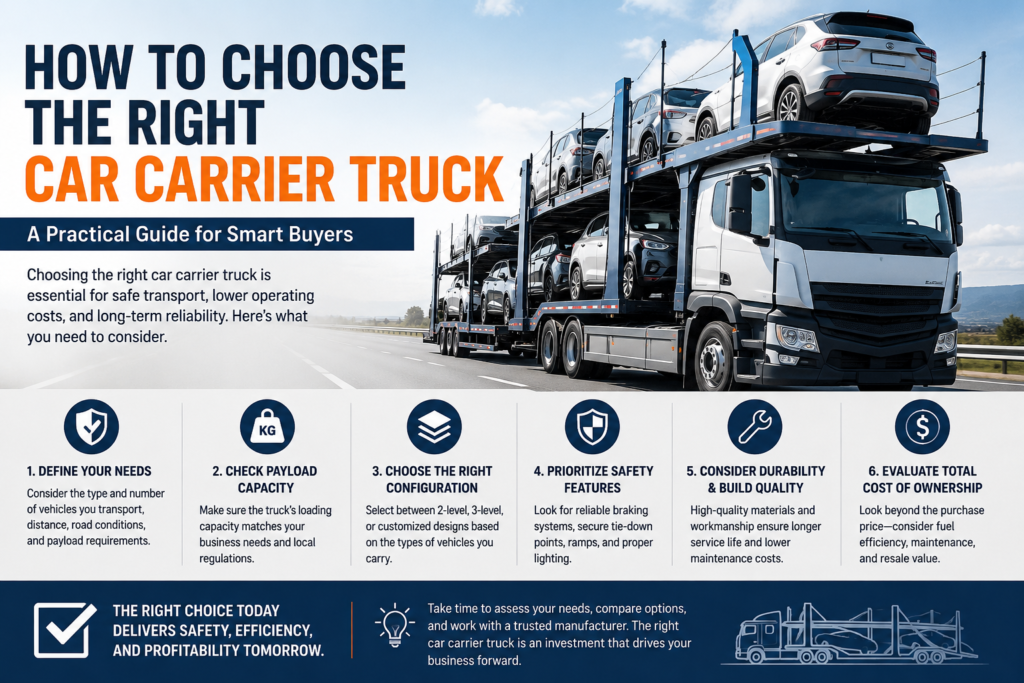
1. Identify Your Vehicle Transport Requirements
Before purchasing a Car Transport Truck, define your transportation needs.
- Number of vehicles per trip: Determine if you need to transport one car at a time or multiple cars simultaneously. Multi-car transport trailers increase efficiency.
- Type of vehicles: Sedans, SUVs, pickups, or commercial vehicles may require different trailer configurations.
- Distance and route: Long-distance hauls require trucks with strong engines and reliable suspension systems.
- Loading and unloading frequency: Hydraulic ramps make repeated loading safer and faster.
Understanding these factors ensures you select a Car Carrier Truck that matches your workflow.
2. Types of Car Carrier Trucks
Different Car Transporters serve different purposes. Choosing the right type affects safety and capacity.
Open Car Carrier Truck
- Ideal for domestic, short-distance transport.
- Lower cost and easier to maintain.
- Exposed vehicles are vulnerable to weather and debris.
Enclosed Car Carrier Truck
- Provides full protection for luxury or high-value vehicles.
- Best suited for premium transport services.
- Higher purchase cost and lower capacity per trailer.
Single-Level vs Multi-Level Trailers
- Single-Level: Easier loading, fewer vehicles per trip.
- Multi-Level: Two or more decks maximize vehicle transport. Adjustable ramps allow different vehicle heights.
Choosing the correct type ensures your auto hauler performs safely and efficiently.
3. Key Specifications to Consider
When comparing specifications, pay special attention to trailer length and deck height, GVW, axle load, hydraulic ramps, tie-down points, and braking system. These details affect both legal compliance and loading efficiency.
- Gross Vehicle Weight (GVW): Must support full vehicle load plus equipment.
- Trailer length and deck height: Adjust for the number and type of vehicles.
- Engine power and transmission: Long-haul trips require strong engines; consider manual or automatic options.
- Suspension system: Air suspension reduces impact and protects vehicles during transport.
- Safety features: Include tie-down points, wheel chocks, anti-lock brakes, and optional cameras.
Correct specifications make your vehicle carrier safe and reliable on every trip.
4. Compliance and Licensing
A legal Car Carrier Truck ensures smooth operations:
- Verify local vehicle transporter licenses.
- Ensure truck and trailer comply with weight limits and road permits.
- High-capacity multi-car transport trailers may require additional permits.
Compliance reduces fines and protects your business reputation.
5. Loading and Unloading Mechanisms
Efficient loading systems increase productivity:
- Hydraulic ramps: Ideal for multi-car transport, faster and safer.
- Manual ramps: Suitable for smaller operations.
- Winches: Necessary for non-drivable or damaged vehicles.
Selecting a Car Transporter with appropriate loading mechanisms ensures safe handling.
6. Maintenance and Durability
Longevity is crucial for a Car Carrier Truck:
- Choose strong chassis and durable trailer materials.
- Rust-resistant frames extend service life, especially in humid areas.
- Regular inspection of ramps, hydraulic systems, and tires reduces downtime.
A durable auto hauler protects transported vehicles and minimizes operational costs.
7. Budget Considerations
Key factors affecting cost include:
- Trailer type (open vs enclosed)
- Number of decks and load capacity
- Engine performance and fuel efficiency
- Brand reliability and after-sales service
Investing in a slightly higher-cost Car Carrier Truck often saves money on repairs and reduces vehicle damage.
8. Tips for Choosing the Right Car Carrier Truck
- Analyze fleet size and operational goals.
- Prioritize compliance and safety features.
- Select trailer type according to vehicle mix.
- Consider long-term maintenance and operational efficiency.
- Ensure ramps and protective systems are suitable for multi-car transport.
Following these steps ensures your Car Transporter meets business needs safely and efficiently.
FAQ – Frequently Asked Questions
What is the difference between open and enclosed Car Carrier Trucks?
Open carriers are cost-effective and easier to maintain but expose vehicles to weather. Enclosed carriers provide full protection for high-value vehicles but are more expensive and carry fewer cars per trip.
How many cars can a multi-level Car Transport Truck carry?
Typically, two-level trailers carry 6–10 cars depending on size, while three-level trailers can transport up to 12 cars. Always check GVW and trailer length.
Are hydraulic ramps necessary for Car Transporters?
Hydraulic ramps are highly recommended for multi-car transport because they speed up loading and reduce the risk of vehicle damage. Manual ramps are only suitable for smaller or occasional transport.
How often should I maintain a Car Carrier Truck?
Routine inspection of chassis, tires, ramps, and hydraulic systems should be done weekly. Full maintenance should be performed every 6–12 months depending on usage.
What licenses are needed for operating a Car Transport Truck?
Licenses vary by country but generally include a commercial driver’s license, vehicle transporter permits, and compliance with weight regulations. High-capacity multi-car transporters may require additional road permits.
If you need a broader comparison of carrier types, capacity, specifications, prices, and buying tips, our complete car carrier truck guide gives a more detailed overview before you choose a final model.
Conclusion
Choosing the right Car Carrier Truck ensures safe, efficient, and reliable vehicle transport. By understanding operational needs, trailer types, specifications, compliance requirements, and maintenance schedules, you can select a vehicle carrier that protects your cargo and supports long-term business efficiency.
If you are still comparing different options, our car carrier truck complete guide can help you understand the full picture before making a purchase.